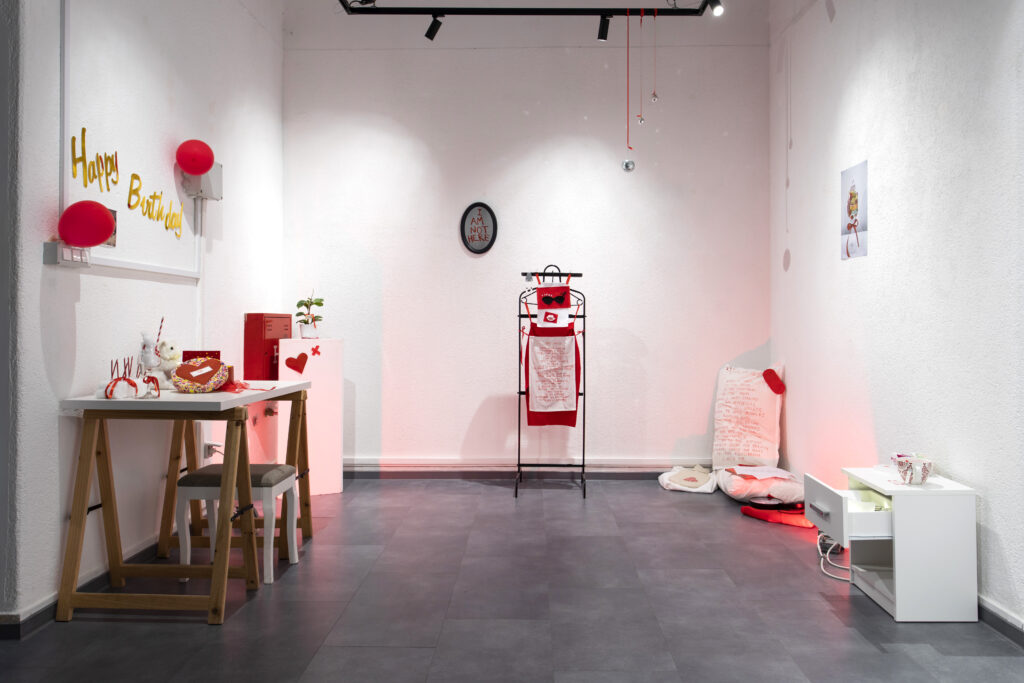
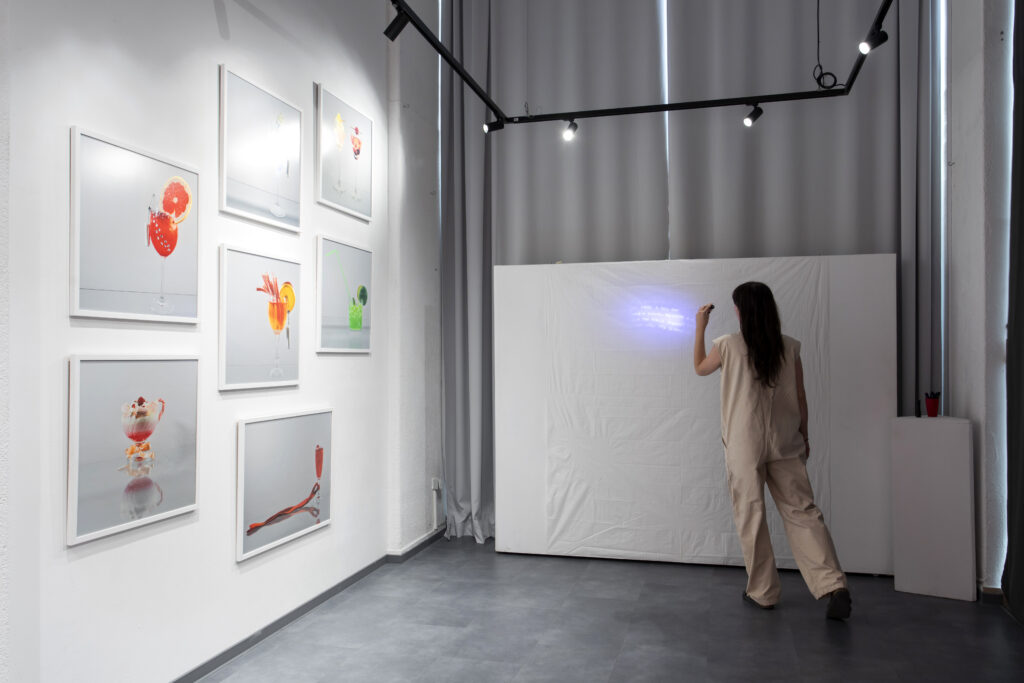
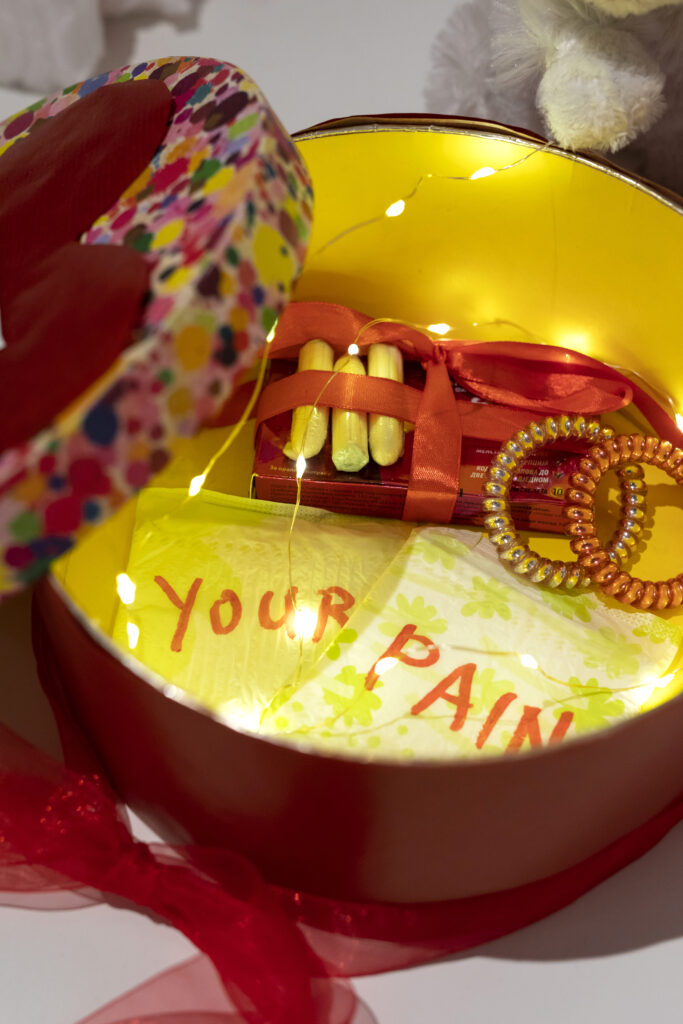
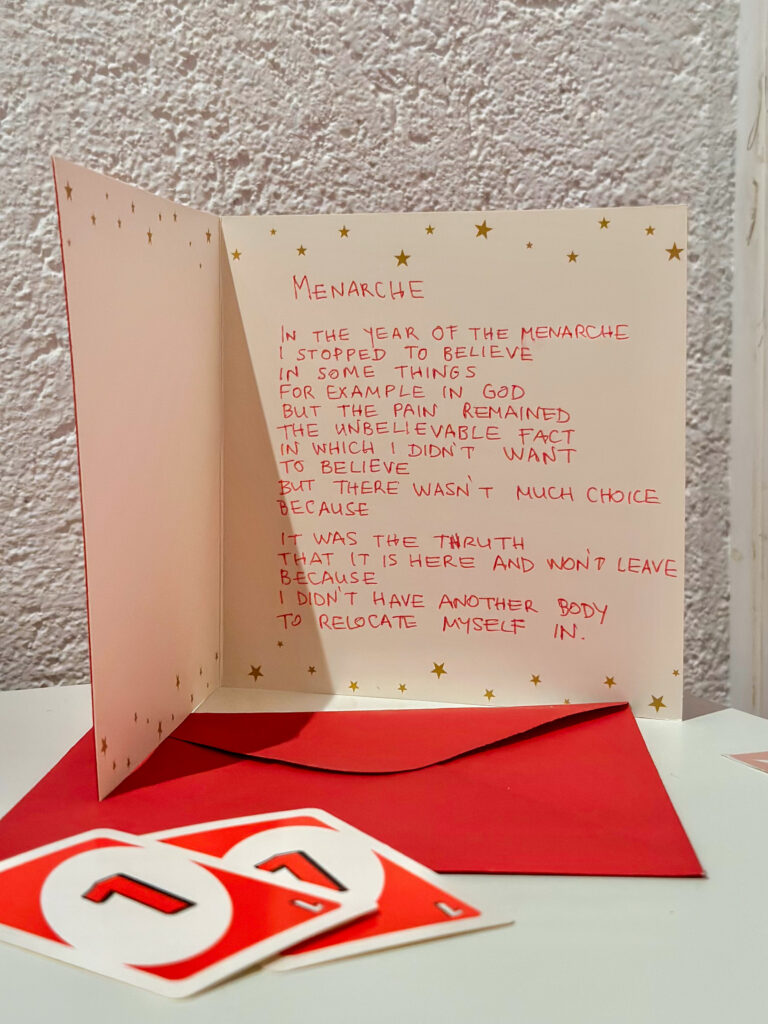
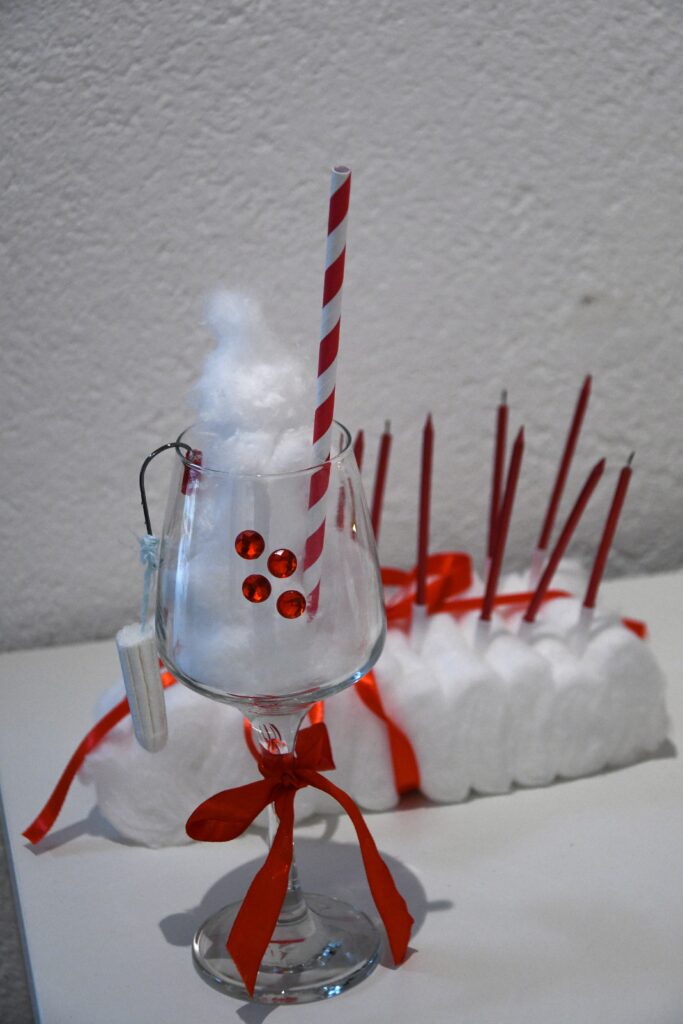
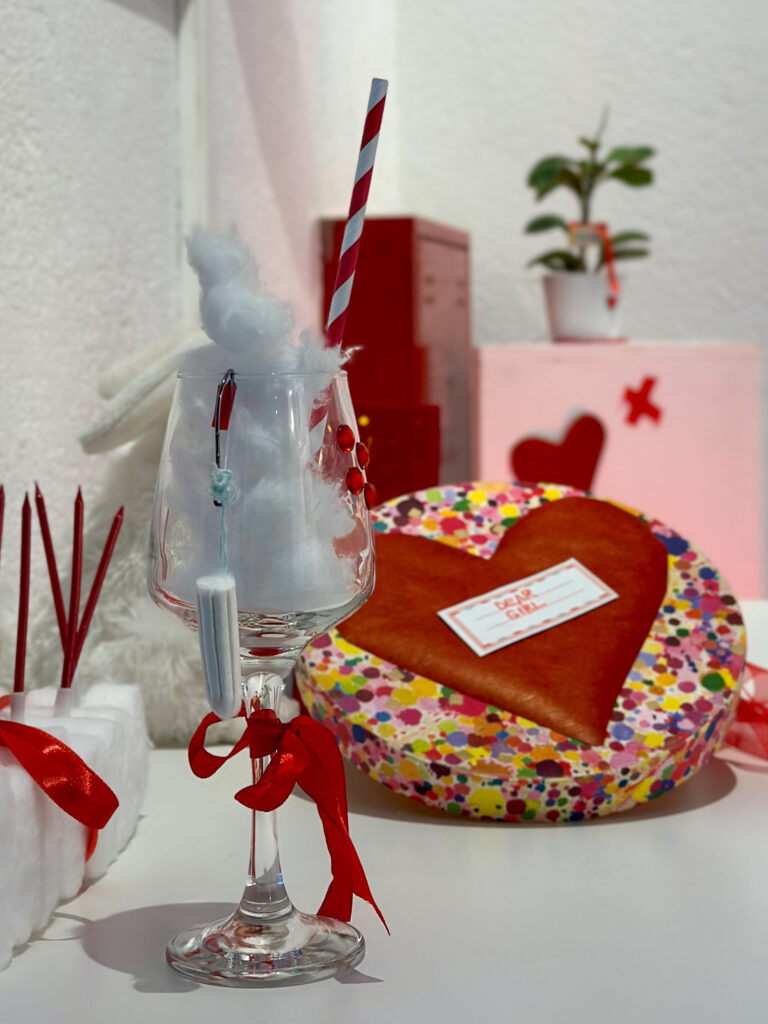
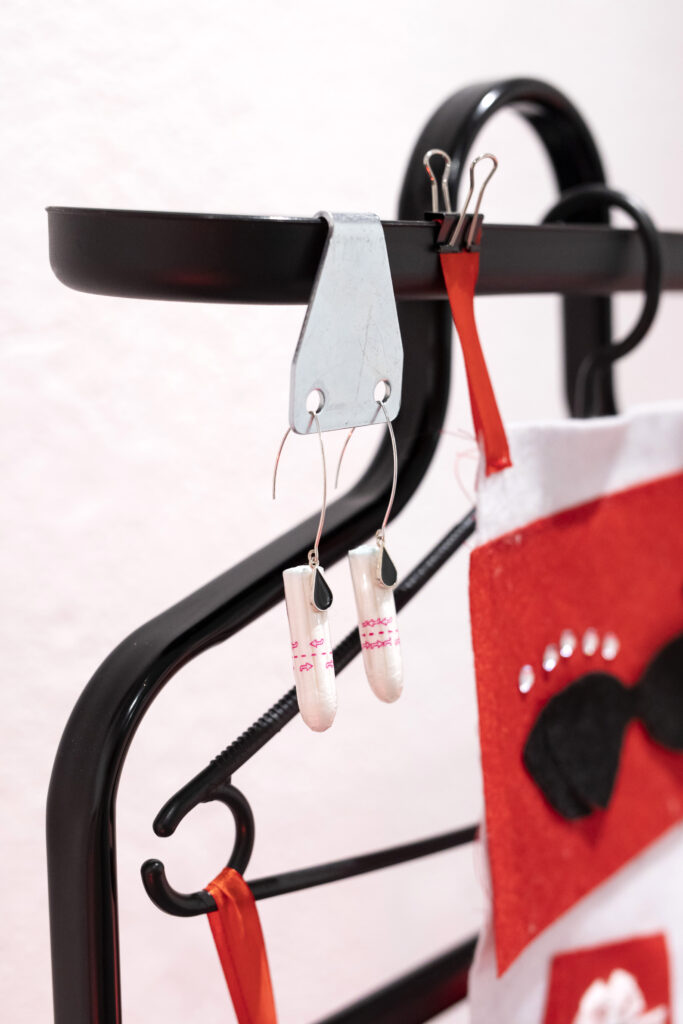
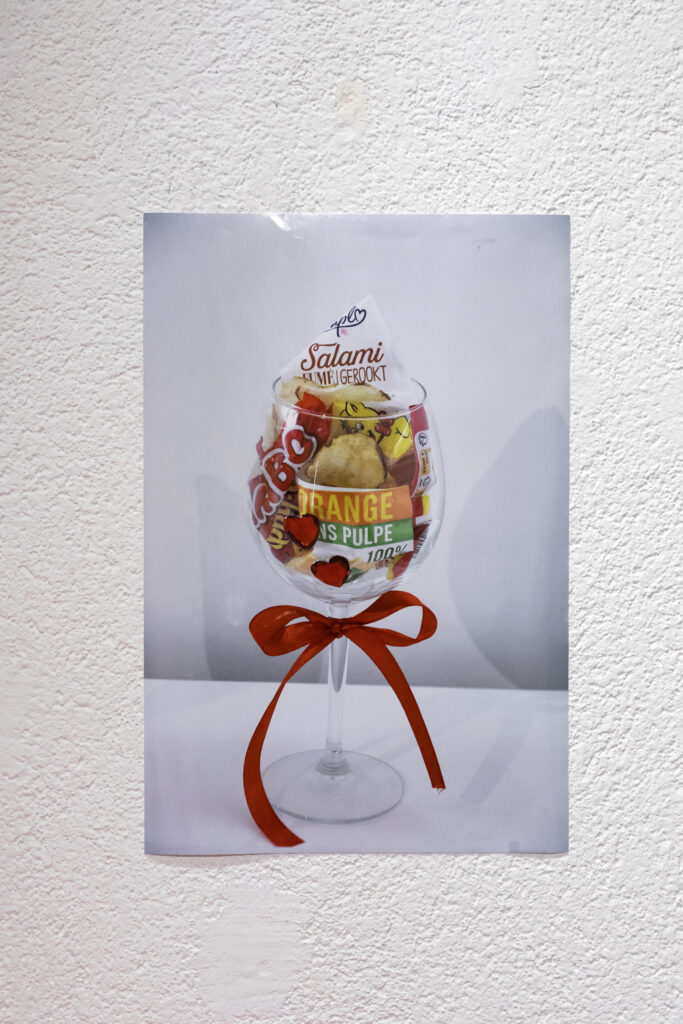
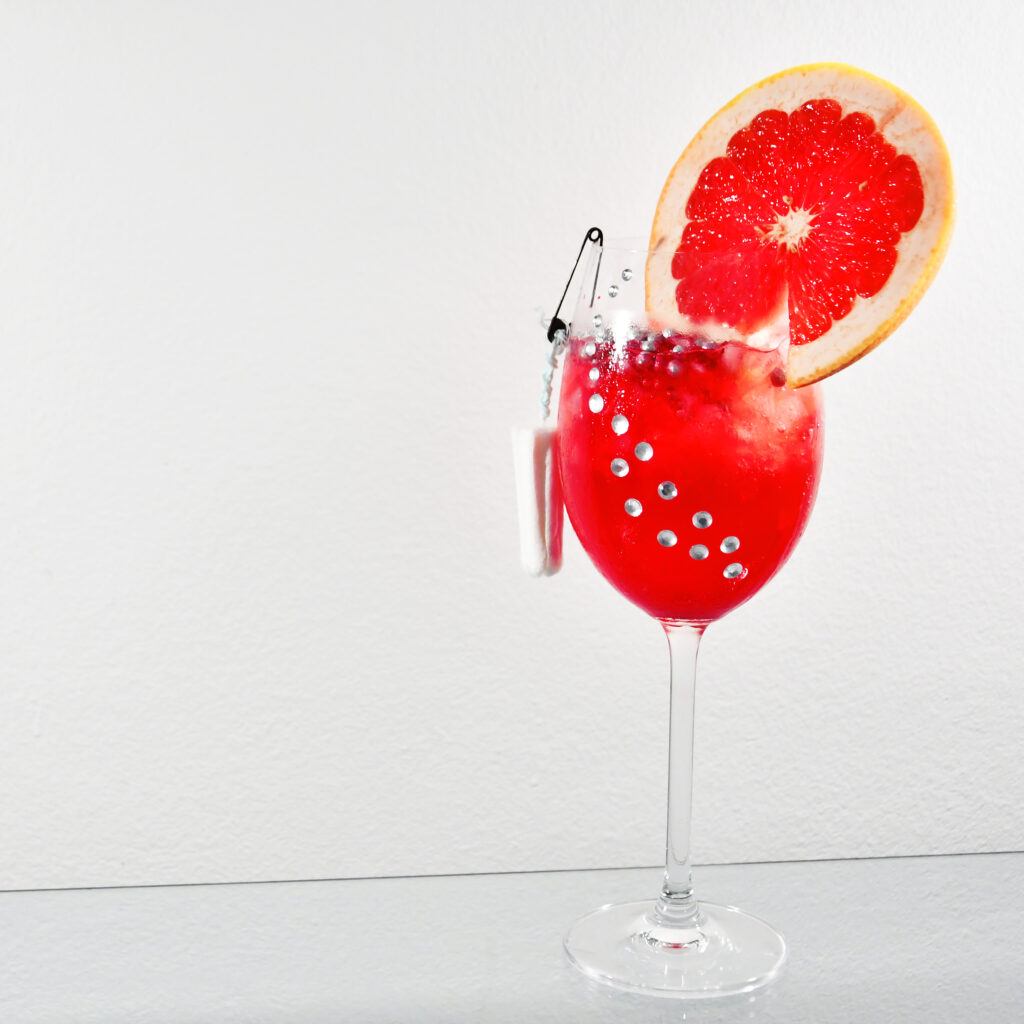
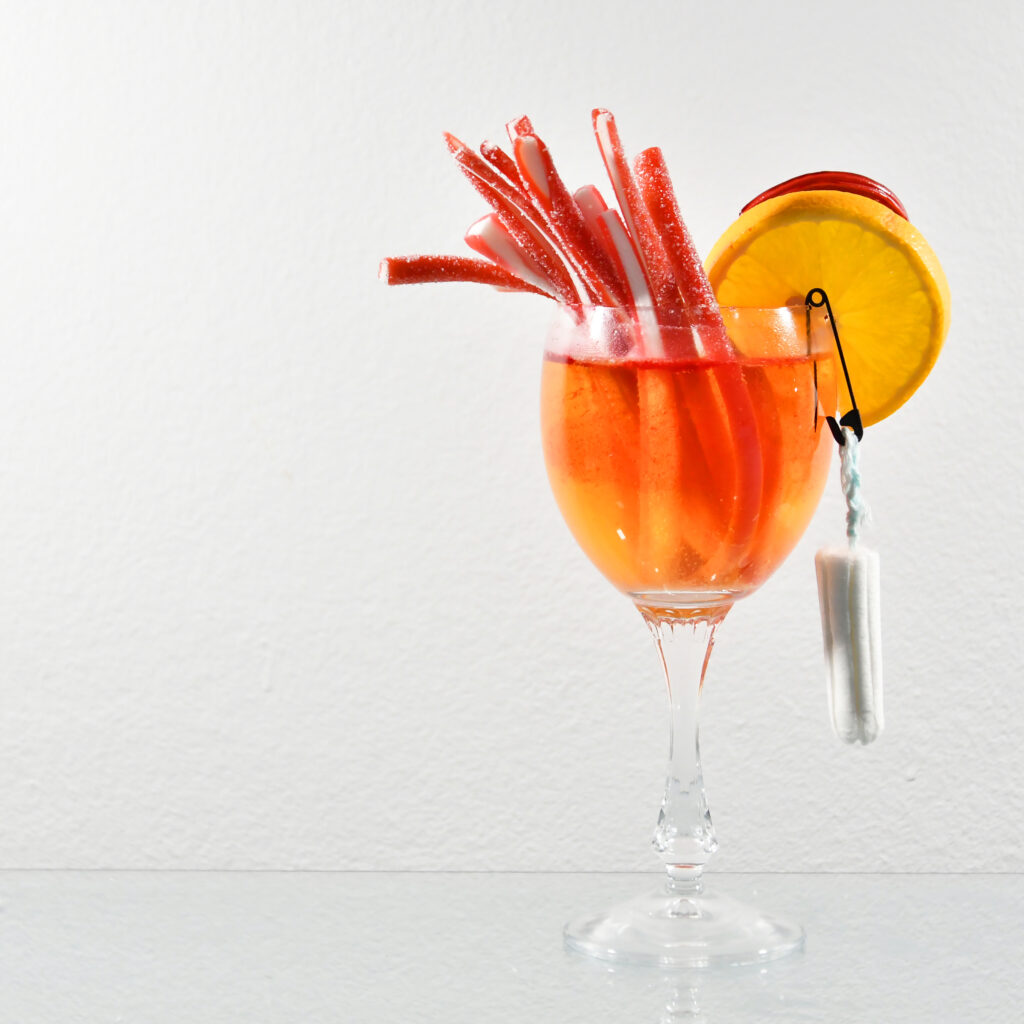
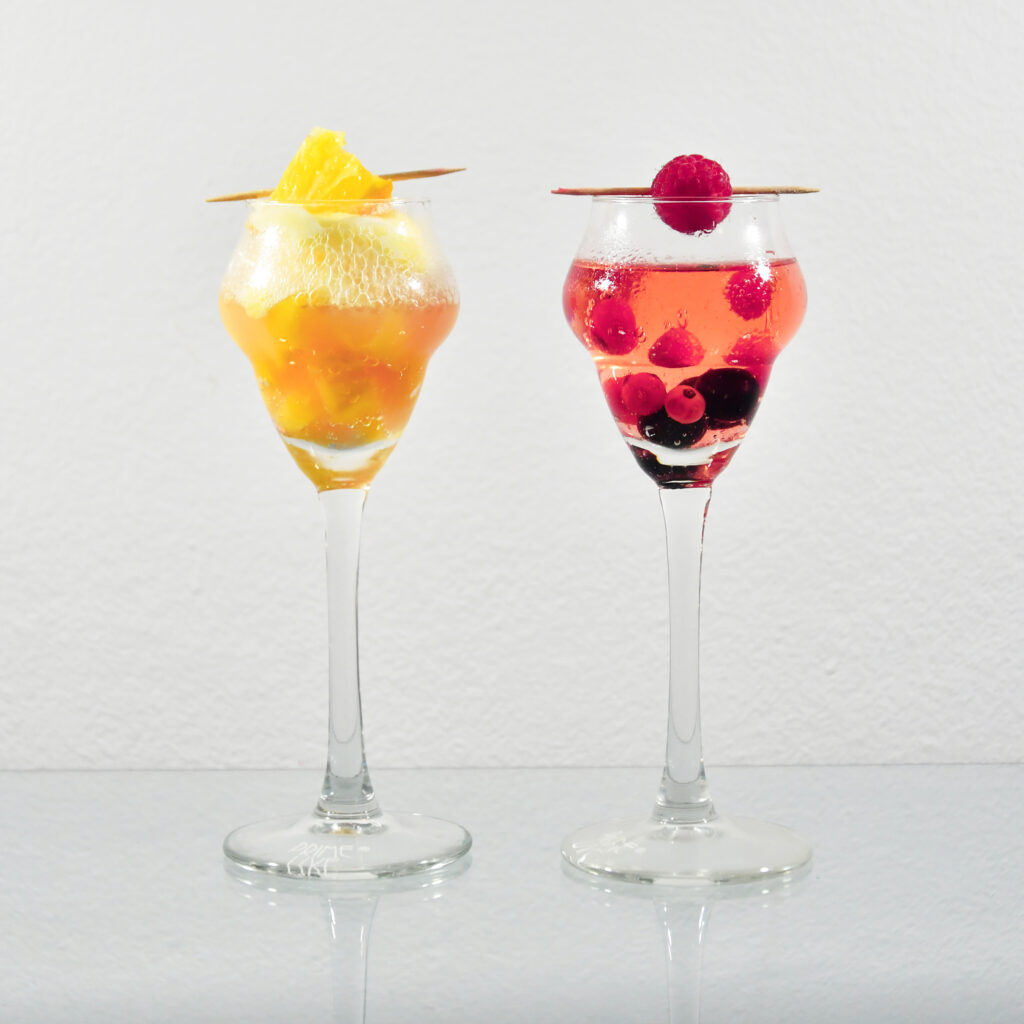
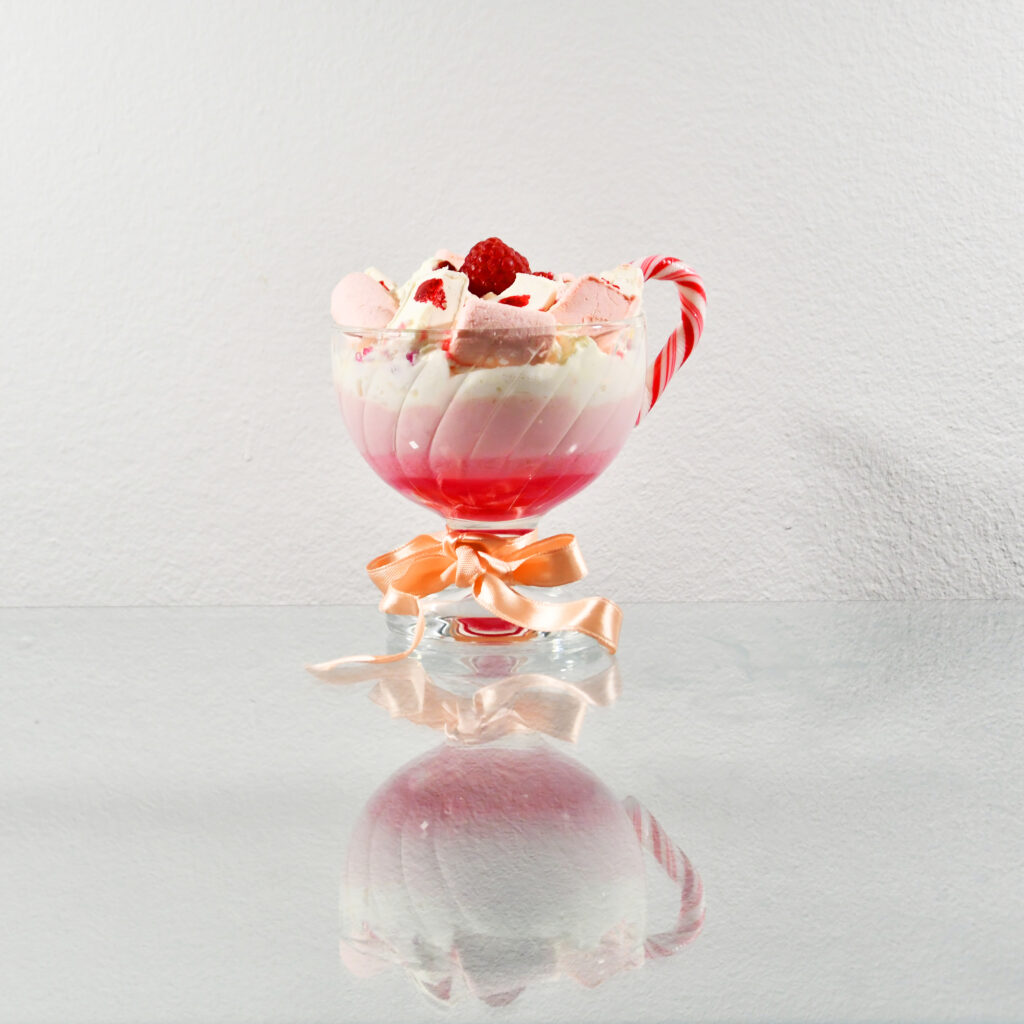
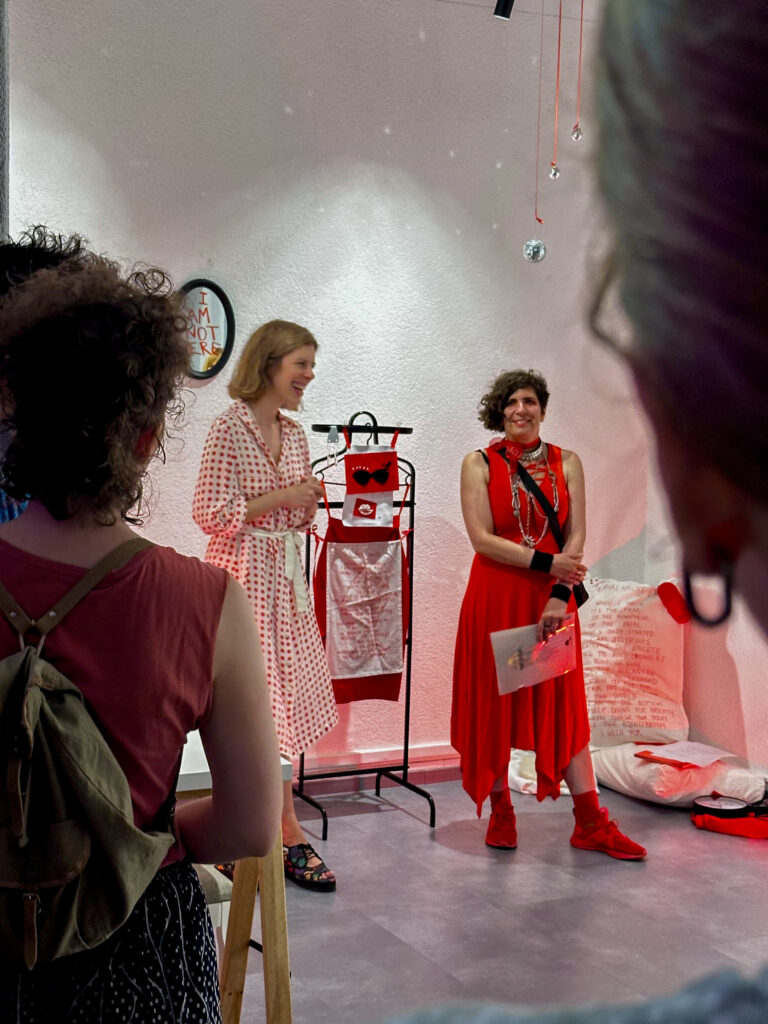
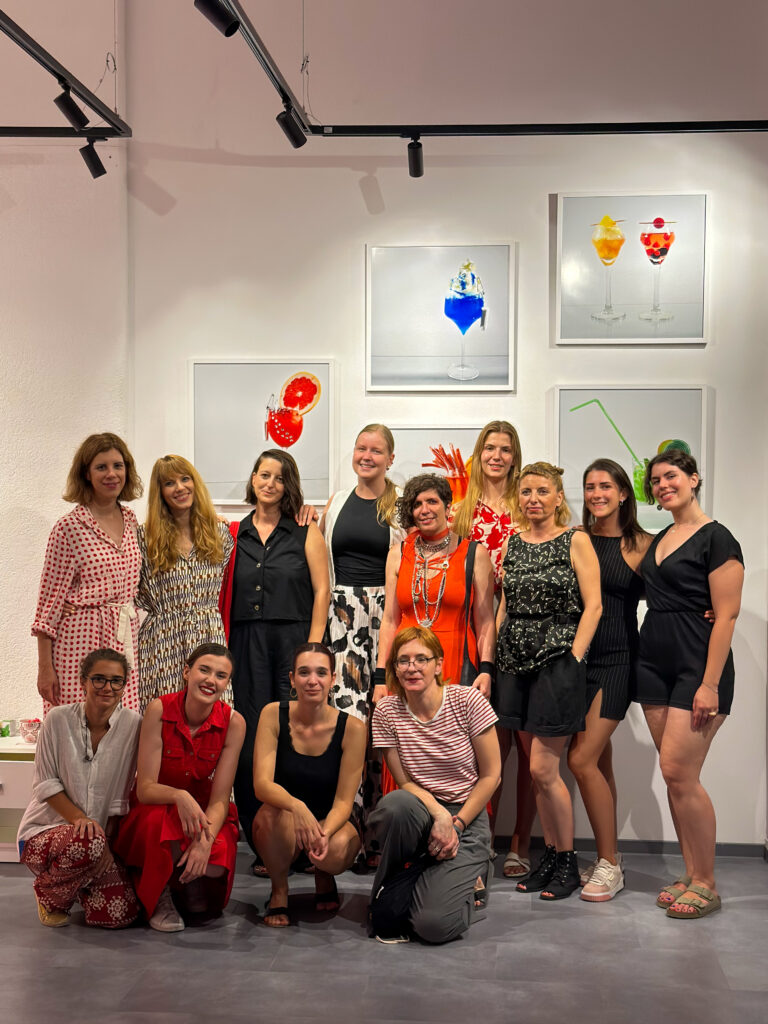
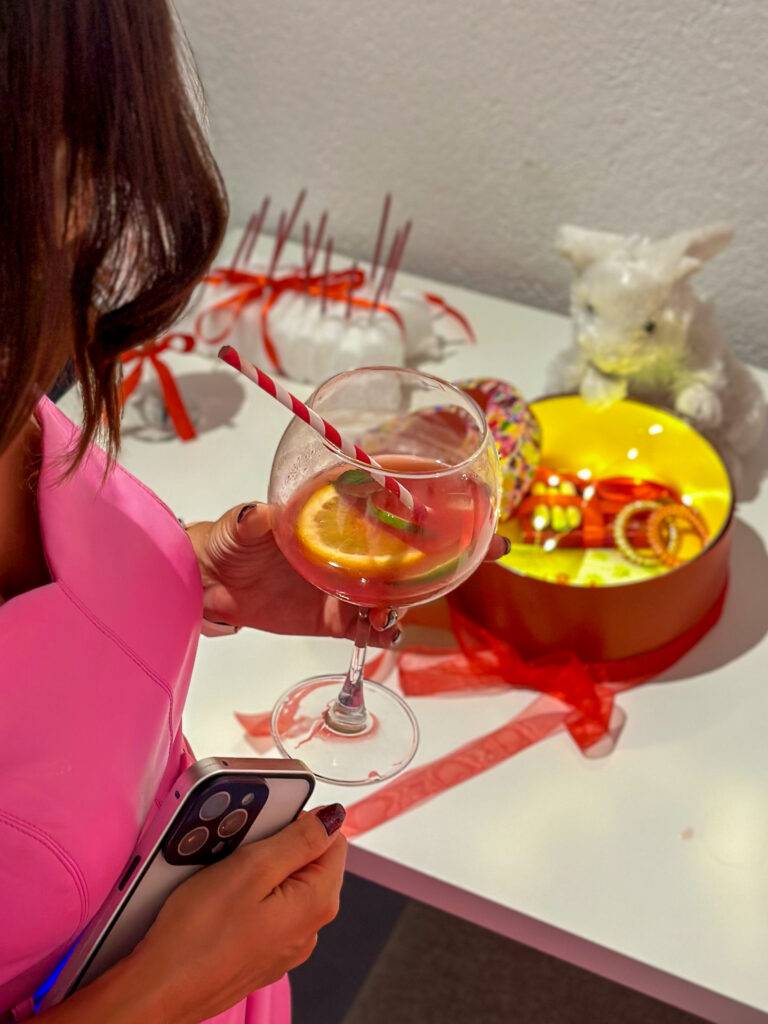
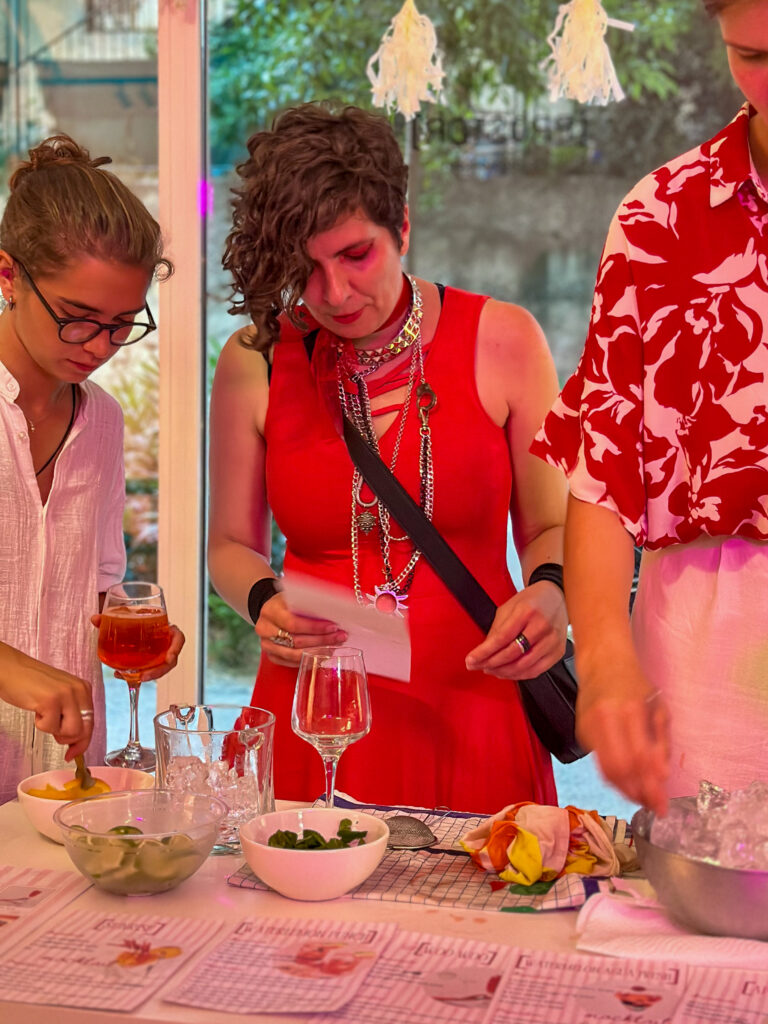
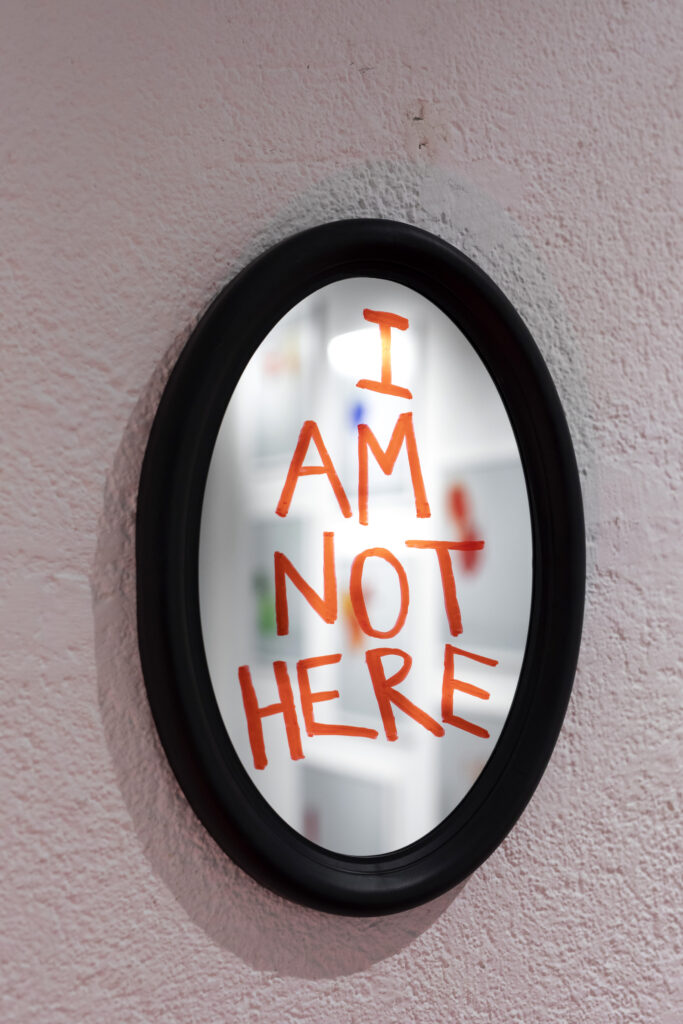
Outcome of the two-week artist residency in Culture Hub Croatia – Prostor in Split (Croatia). Dysmenorrhea Diaries was a project started in 2021 as a collection of poetry written as a cognitive-behavioural exercise during severe menstrual pain. It was further developed into a site-specific exhibition at International Cité des Arts in France (Paris) to fit the living studio exhibition space, which consisted of a spatial poem-installation about menstrual pain and a series of photographs about PMS and cravings for particular food. In the CHC Prostor artist’s residency, this project is adjusted to exhibiting in a white gallery cube, changing parts of the poem installations to better fit the space and using objects of everyday use found in the gallery and residence space, and adding simple interactive participatory work to the sum to activate the audience to give their opinion on the matters. The exhibition was opened, serving red and orange cocktails and mocktails to match the vibe of the PMS cocktails part of the presentation.
Curator statement:
Pain always has a specific language, whether it is a cry, a sob, or a tensing of the features, and it is a language in itself as well.” (1)
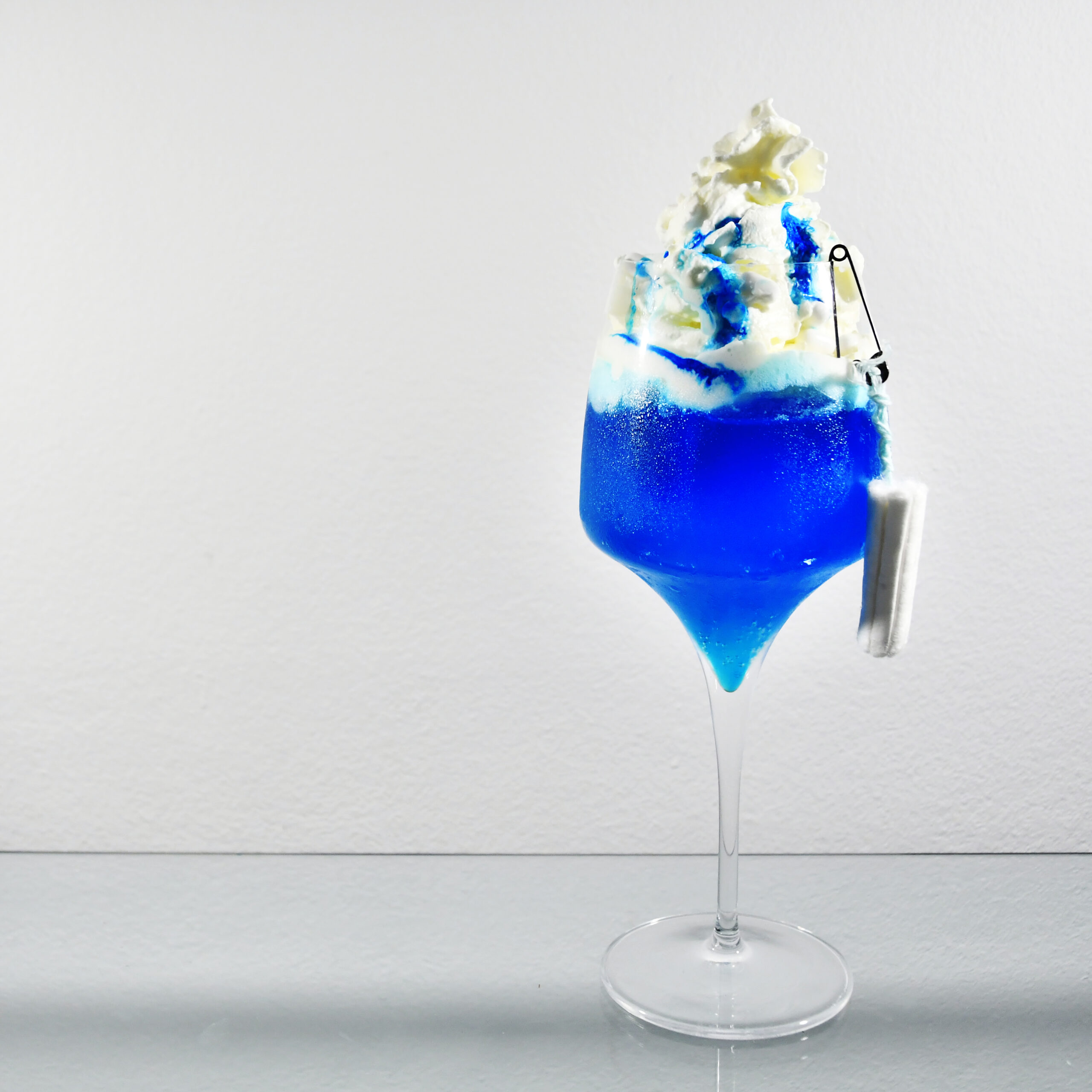
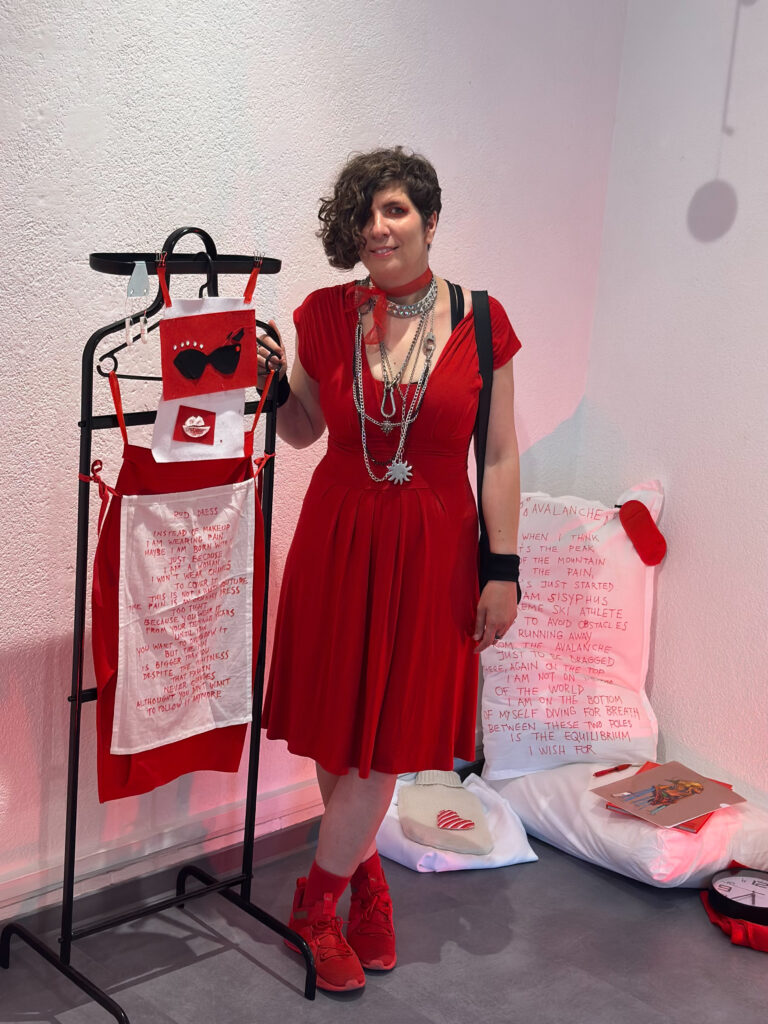
Interested in the phenomenology of menstrual pain and inspired by her own experience of living with chronic pain, Milica Denković develops the project “Dysmenorrhea Diaries”, with which she questions the understanding of pain as a personalized, immeasurable and unshareable experience, but also pain as a female heritage. The exhibition consists of three interconnected parts, the first of which presents a series of installations composed of various, often piled up, objects, that together form the bedroom. The installation is dominated by the color red – the color of pain, but also of strength. It is an intentional choice made by a member of the generation that grew up with advertisements for sanitary pads with blue liquid. Where does this fear of the color red come from? And while some minimal progress is visible in this regard, menstruation is, in general, still a taboo, and the pain associated with it is too often denied, ignored or neglected.
Menstrual pain here also serves as a metaphor for the illnesses that affect women, and the way they are diagnosed and treated. In addition to the fact that medical research is largely based on men, the healthcare providers and the healthcare system are failing women in their responses to and treatment of women’s pain, especially chronic pain. Women are more likely to be offered minor tranquilizers and antidepressants than analgesic pain medication. Women are less likely to be referred for further diagnostic investigations than men are. And women’s pain is much more likely to be seen as having an emotional or a psychological cause, rather than a bodily or biological one. Women are the predominant sufferers of chronic diseases that begin with pain. But before our pain is taken seriously as a symptom of a possible disease, it first has to be validated — and believed—by a medical professional. And this pervasive aura of distrust around women’s accounts of their pain has been enfolded into medical attitudes over centuries. Prevailing social stereotypes about the way women experience, express, and tolerate pain are not modern phenomena — they have been ingrained across medicine’s history. Our contemporary biomedical knowledge is stained with the residue of old stories, fallacies, assumptions, and myths. (2)
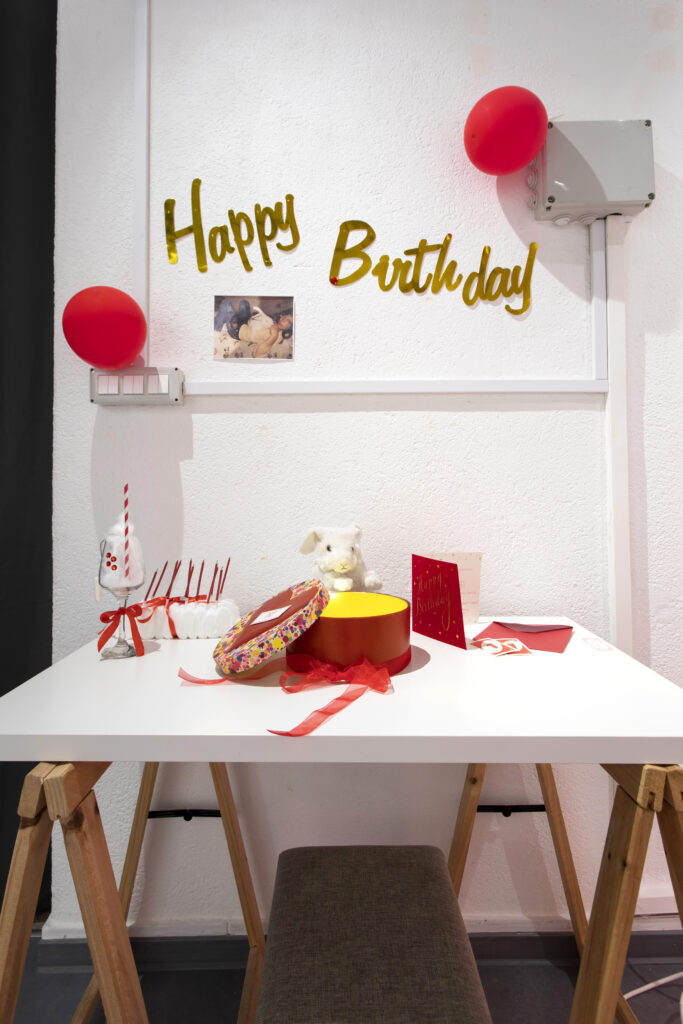
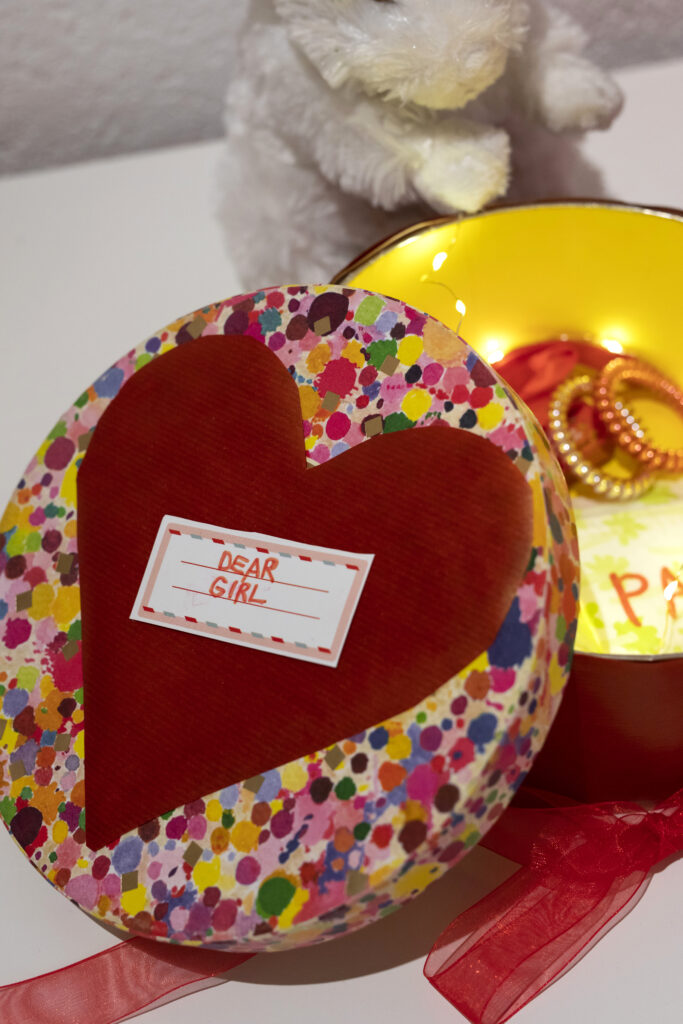
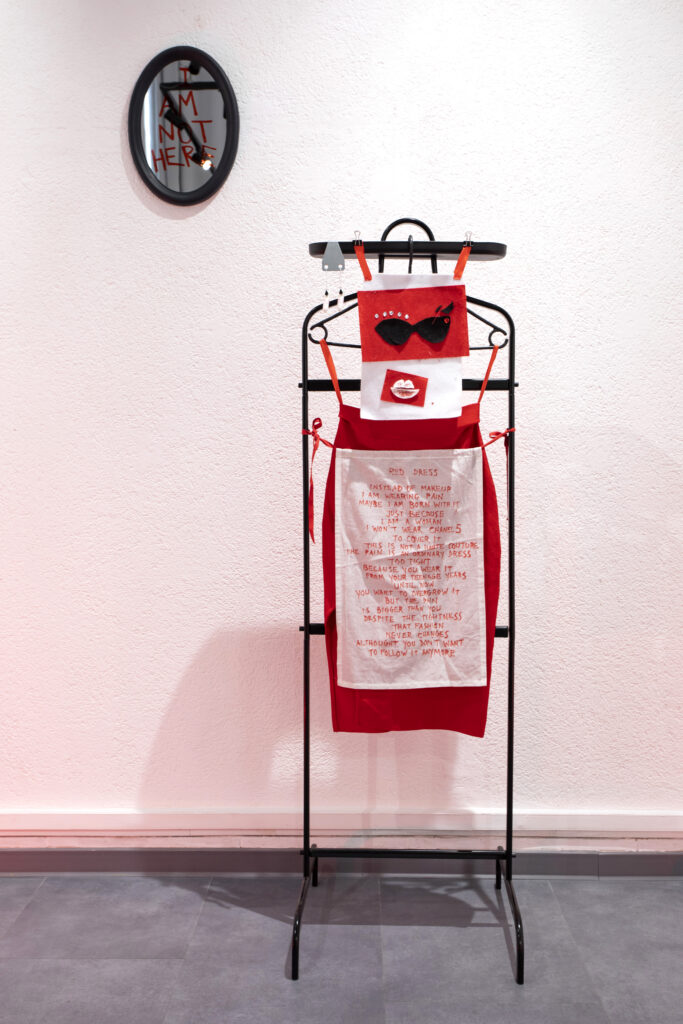
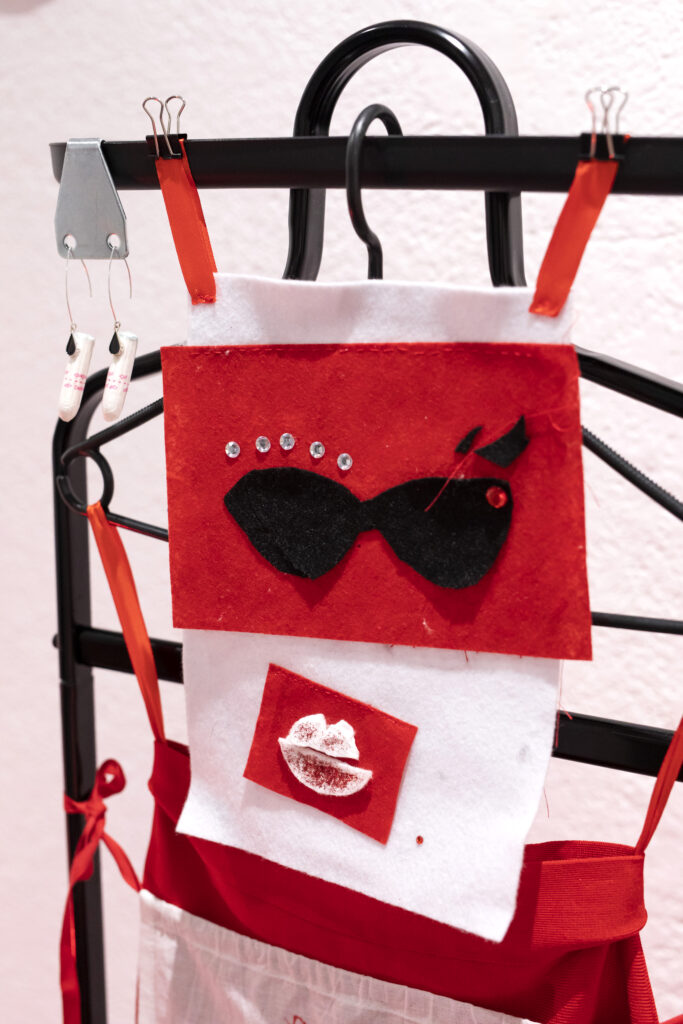
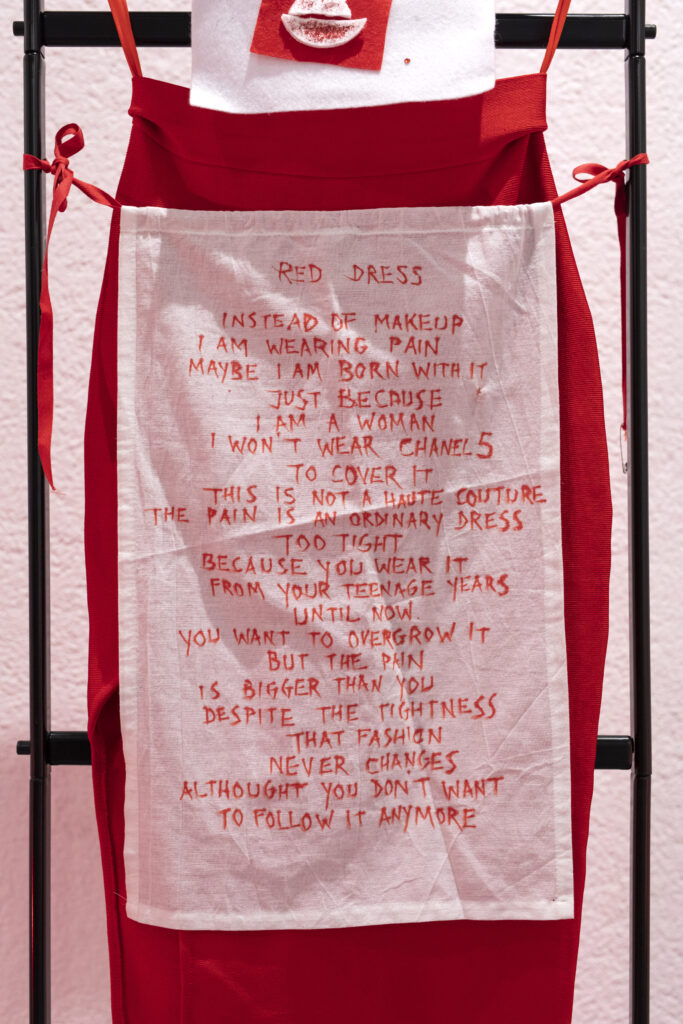
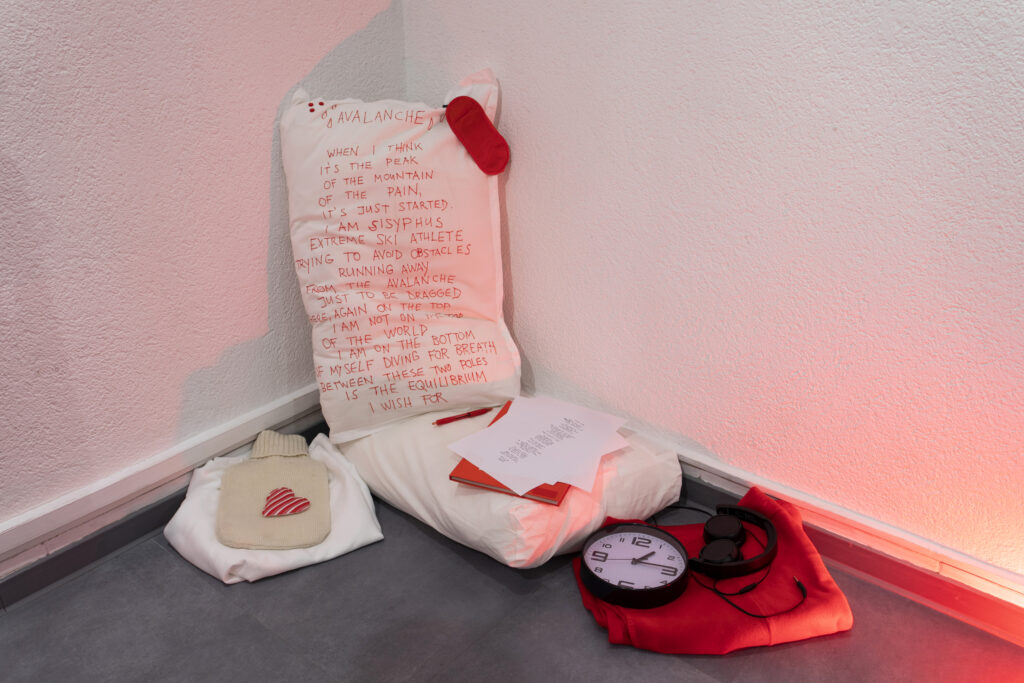
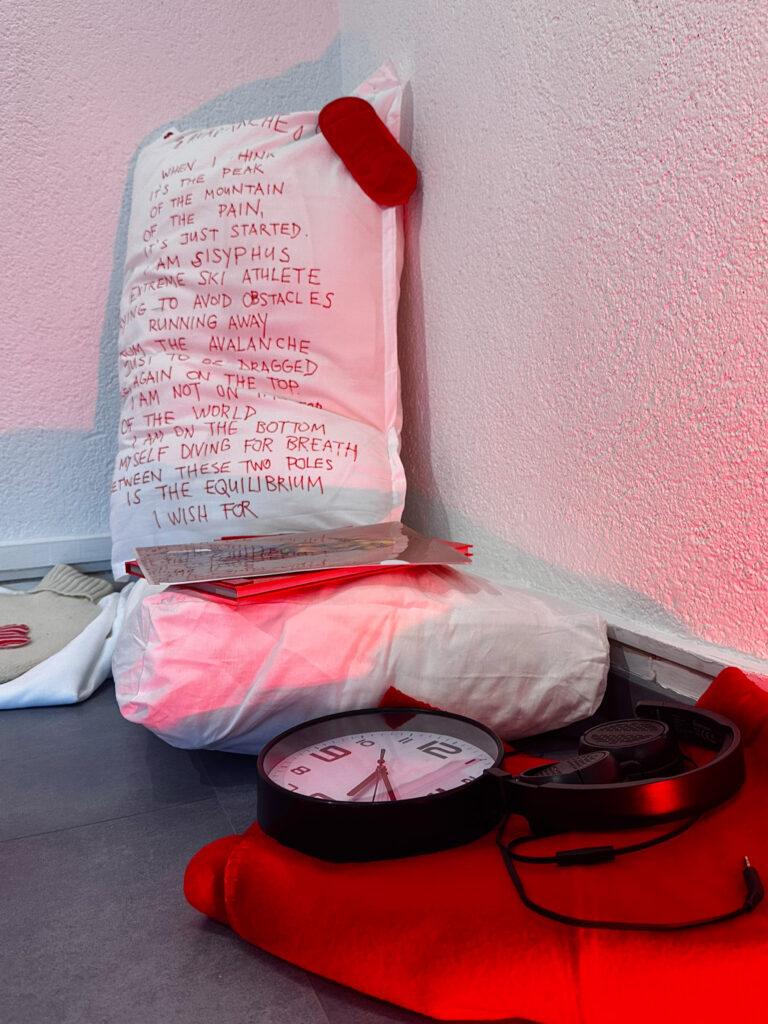
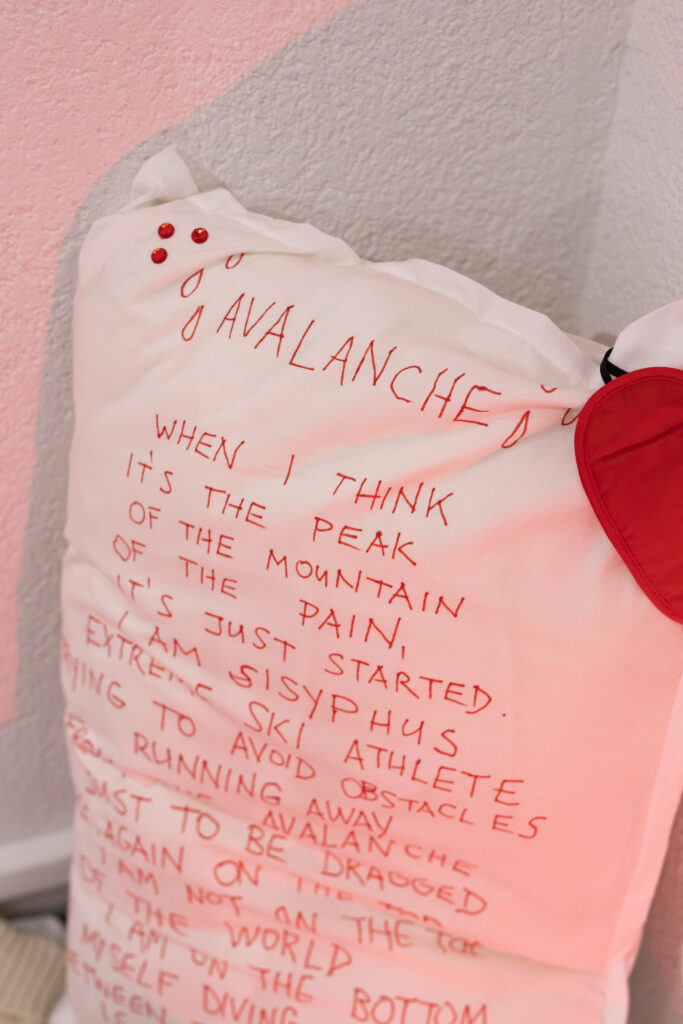
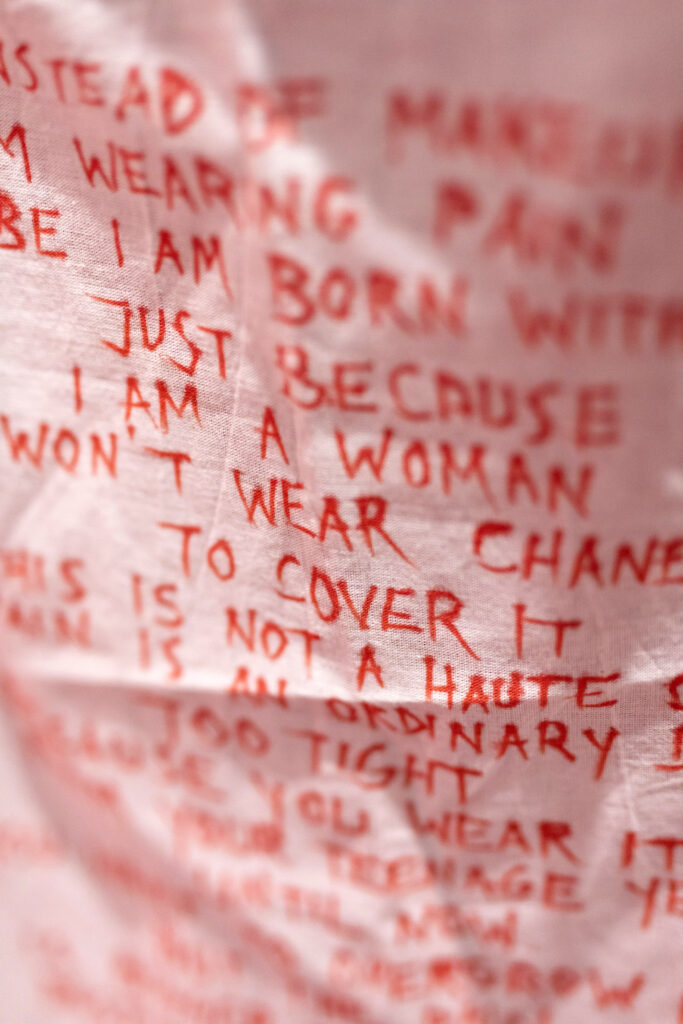
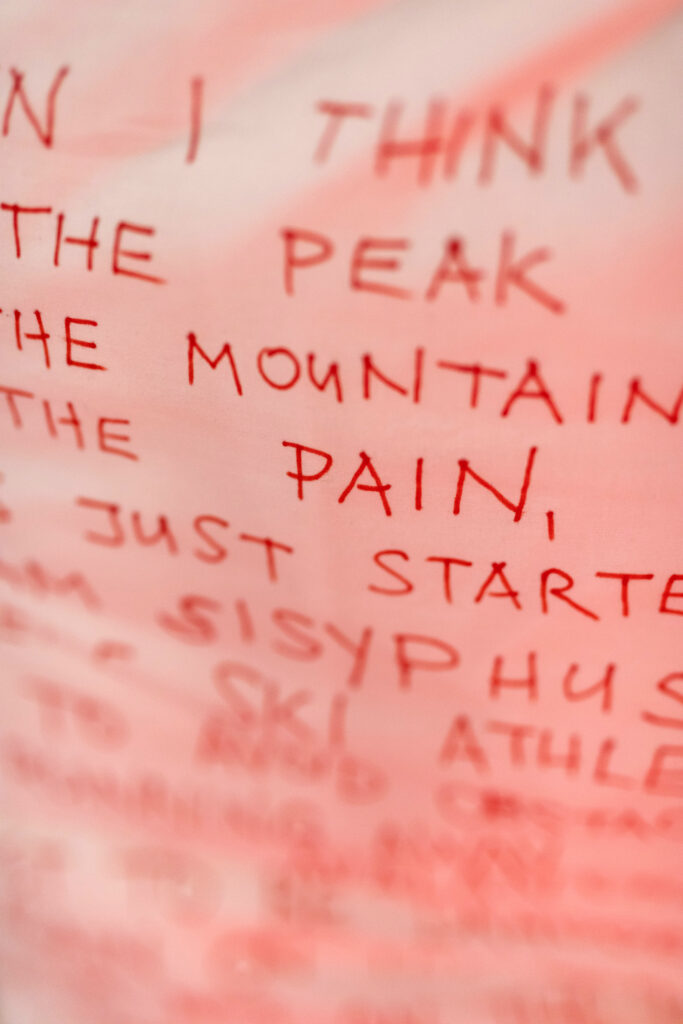
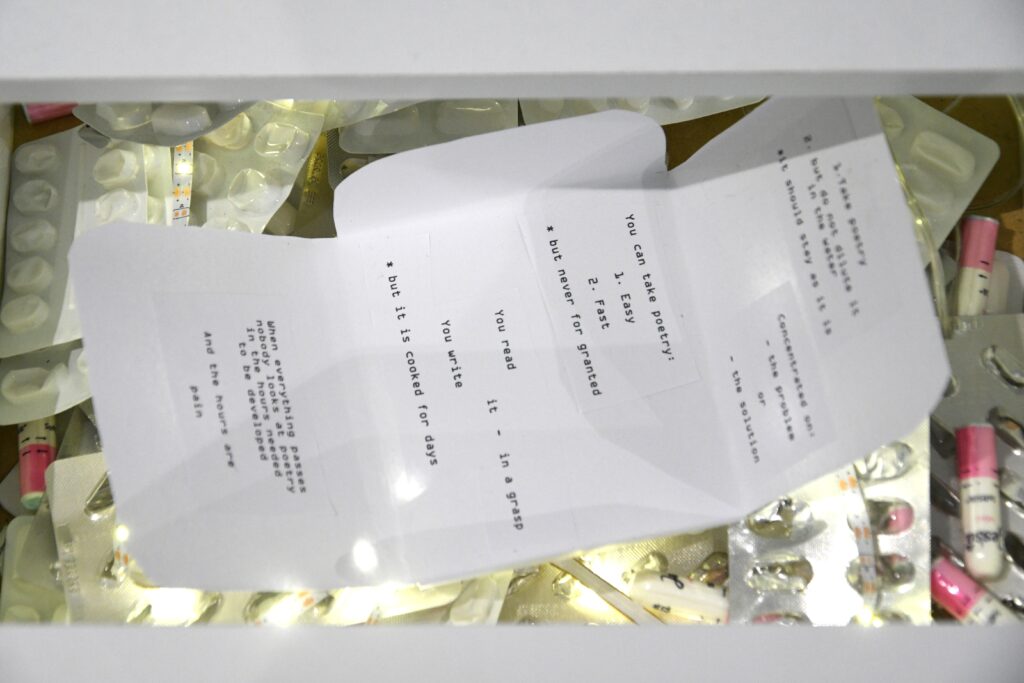
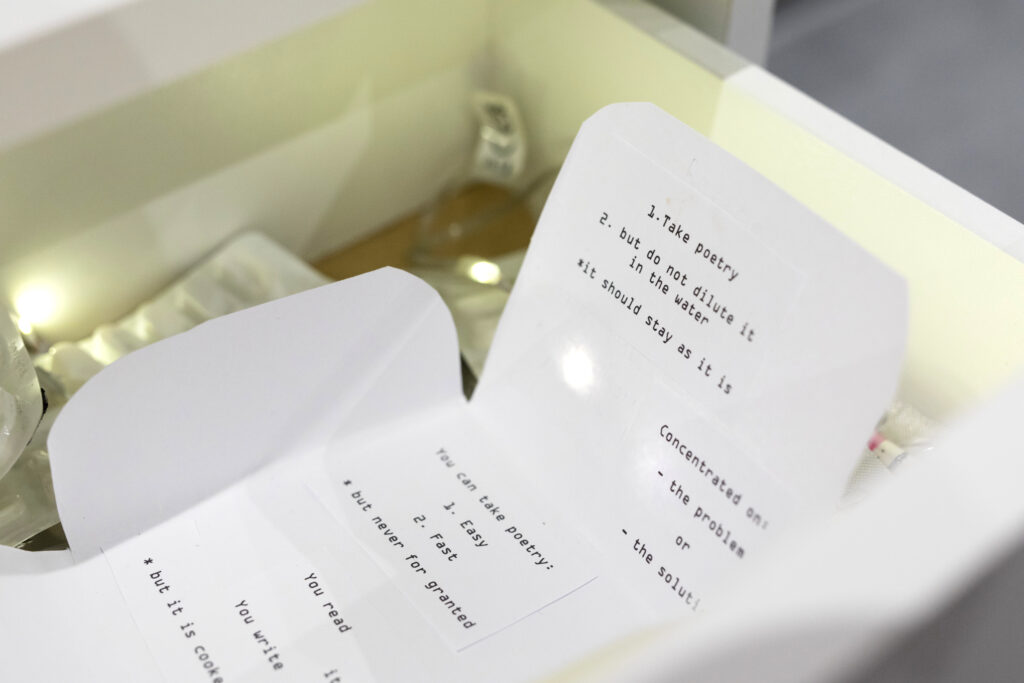
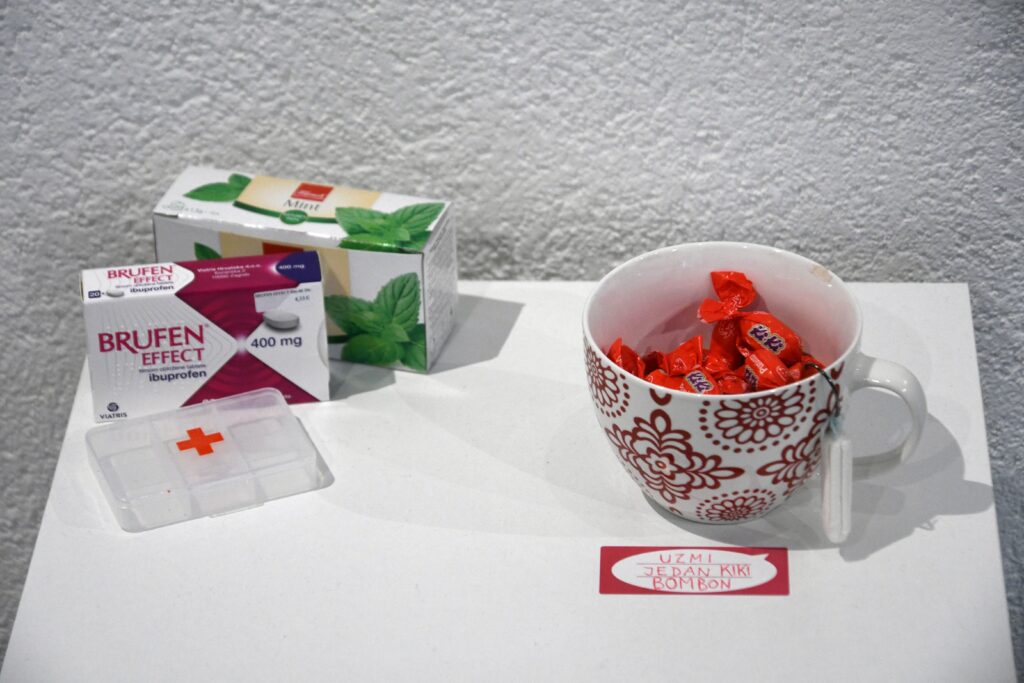
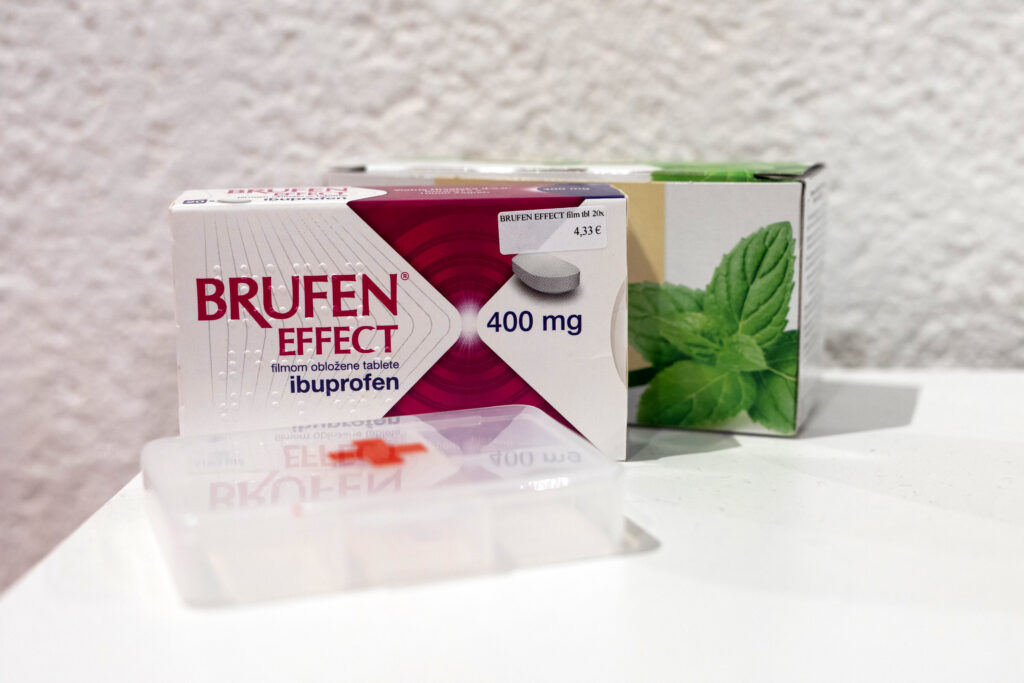
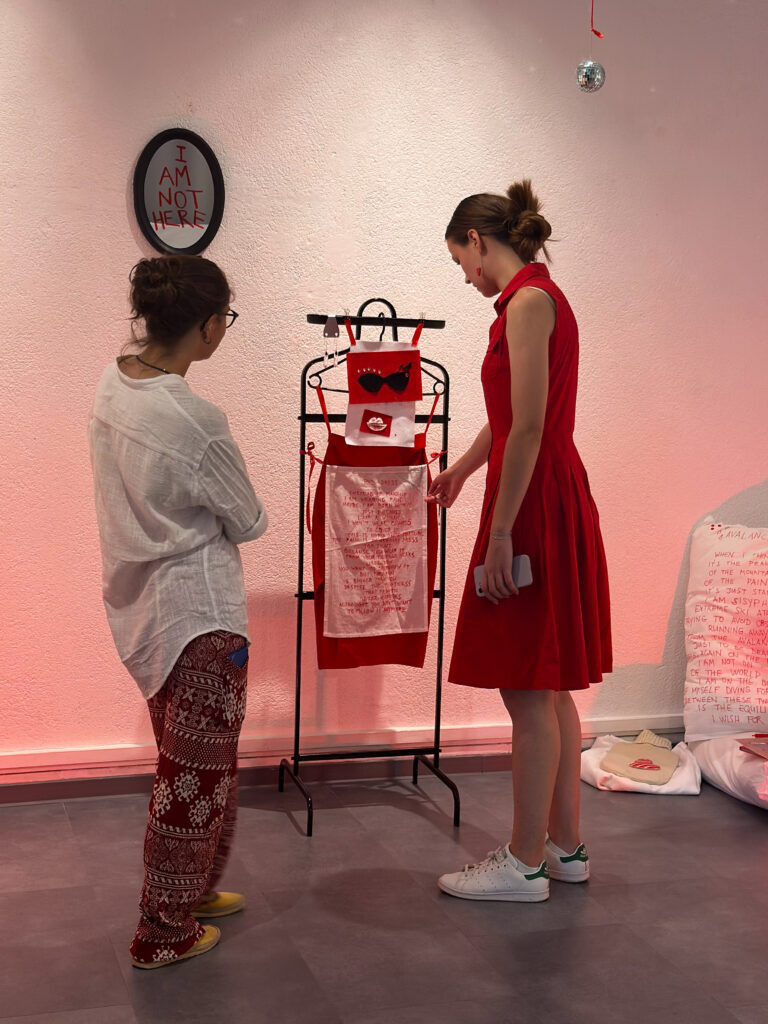
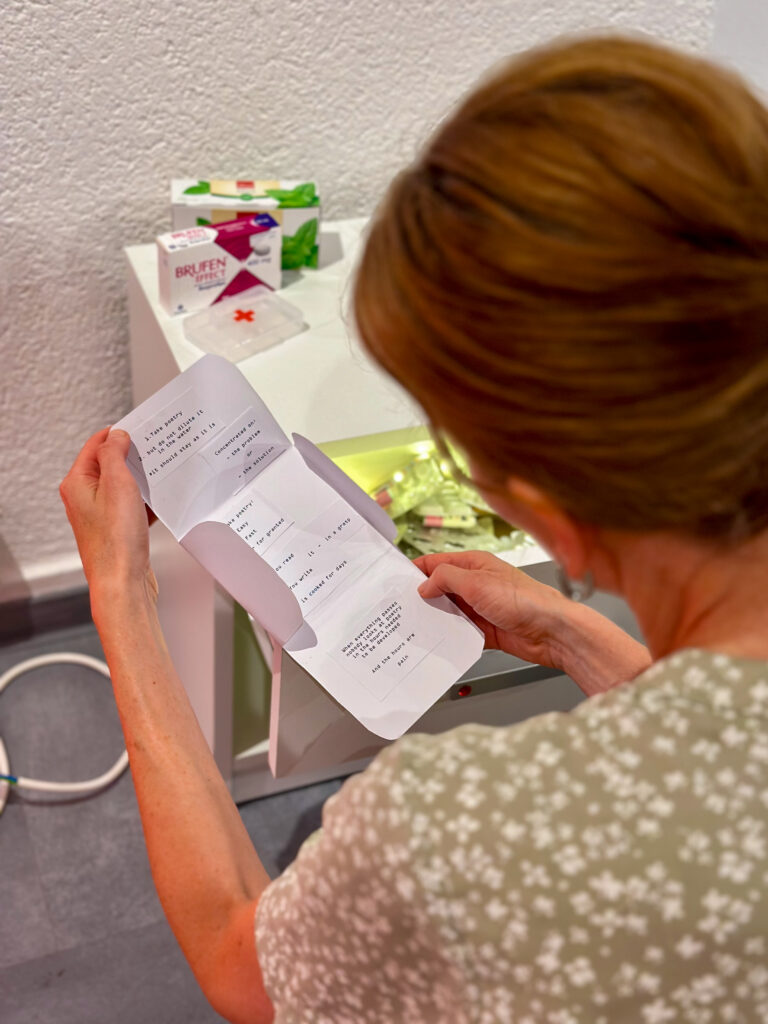
Milica Denković translates her own experience of dysmenorrhea and chronic colitis into poetry as a way of coping with pain, or channeling it. The installations are therefore created with the idea of how to objectify poetry. There are four poems in the “room”, each of which is linked to a specific object(s). Menarche talks about the first menstruation and the discovery of the pain. Since she got her period when she was 11 (at the same age that she began writing poetry), she presents this poem in an installation that depicts a kid’s birthday as a symbol of the transition from childhood to adulthood. The red dress as the central object embodies the poem of the same title, which objectifies pain through a red dress tailored for an eleven-year-old girl and the feeling of discomfort that it represents for the artist today, being an adult woman. It also symbolizes the concept of masking pain in public, and raises questions about the fashion and comfort of clothing for women and people who experience severe pain. The short poem Avalanche describes the experience of severe menstrual pain that can last for several hours. This pain is represented as a mountain of pillows, accompanied with sheets, blankets, pain management devices, and a wall clock. There is also a notebook and a pencil, symbols of the artist’s use of writing poetry as a pain management technique. Finally, the short poem Recipe hidden in the nightstand speaks of poetry as a painkiller and the time needed to write it, which is actually time spent in pain. It is represented with the nightstand, painkillers, tea, common everyday products that she uses to relieve nausea and pain. Each of these installations calls for micro-interaction, with messages resembling Alice in Wonderland’s instructions for navigating the strange world she entered, which adds the playfulness to this scenography as a whole. All of them together represent the room as a space in which pain is experienced, where we allow it to be felt, or where it is hidden within four walls.
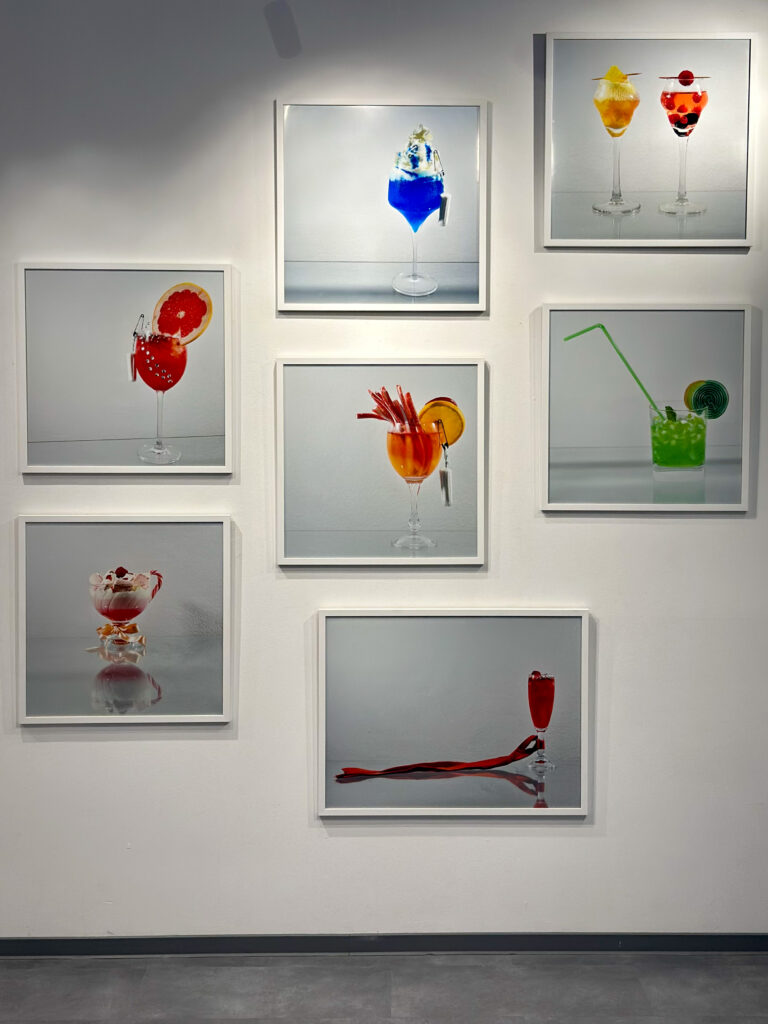
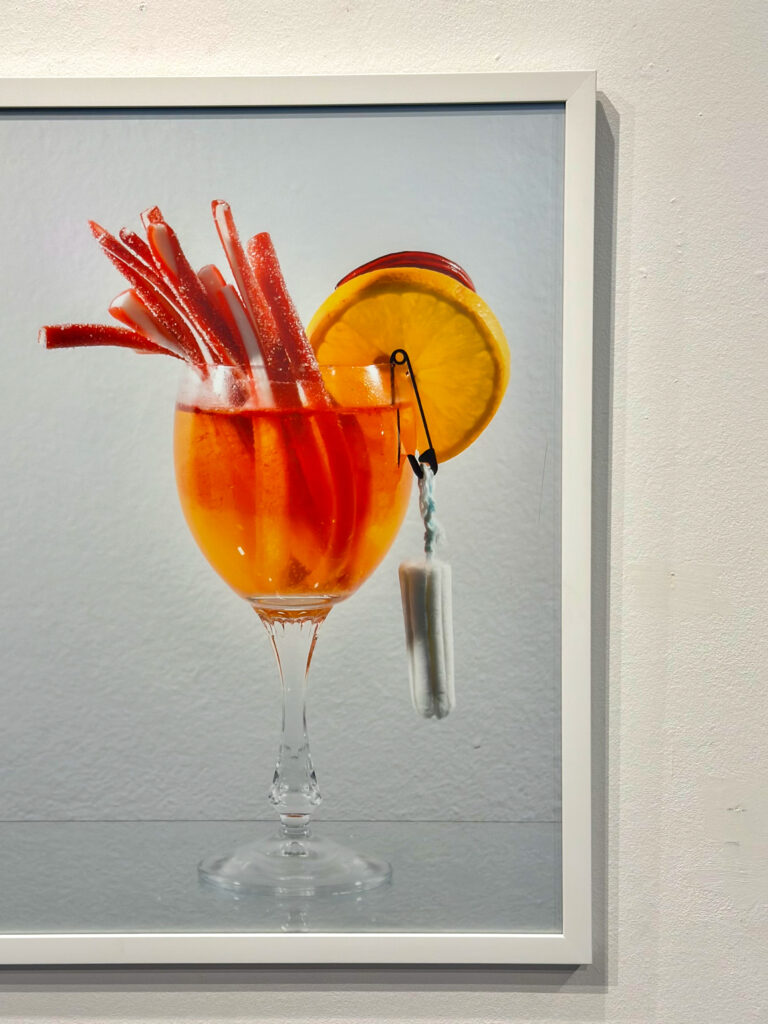
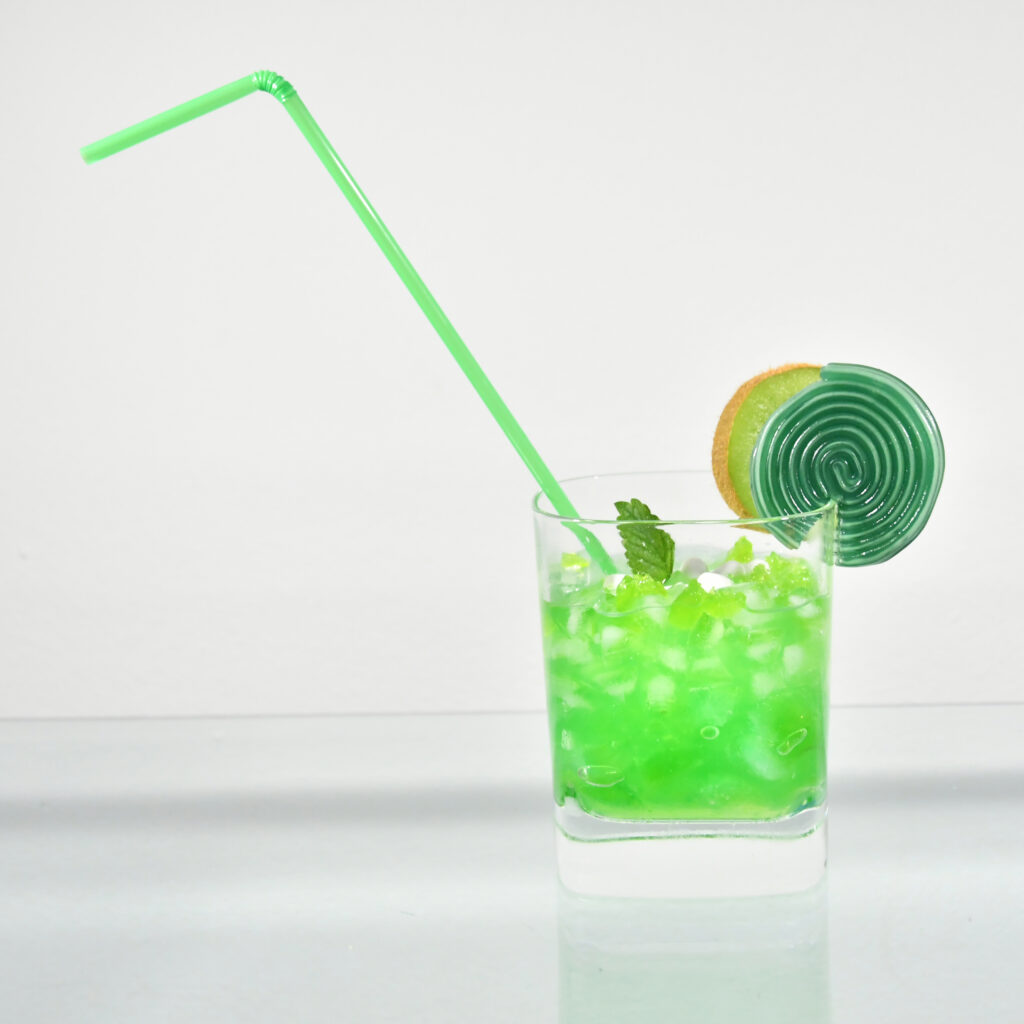
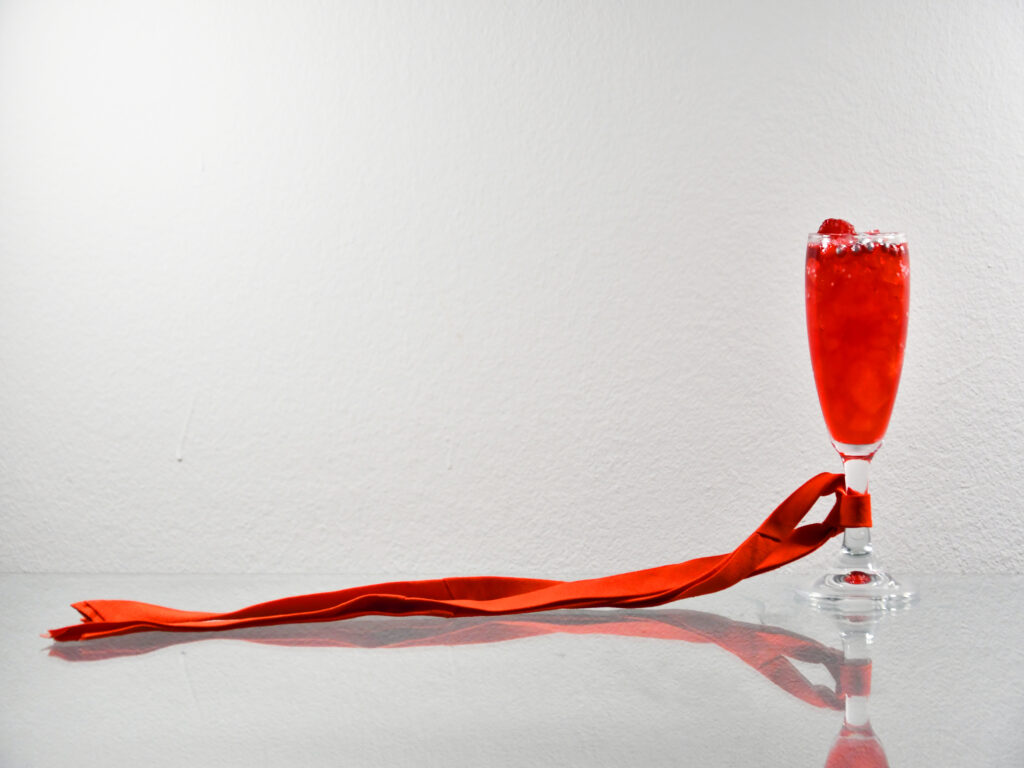
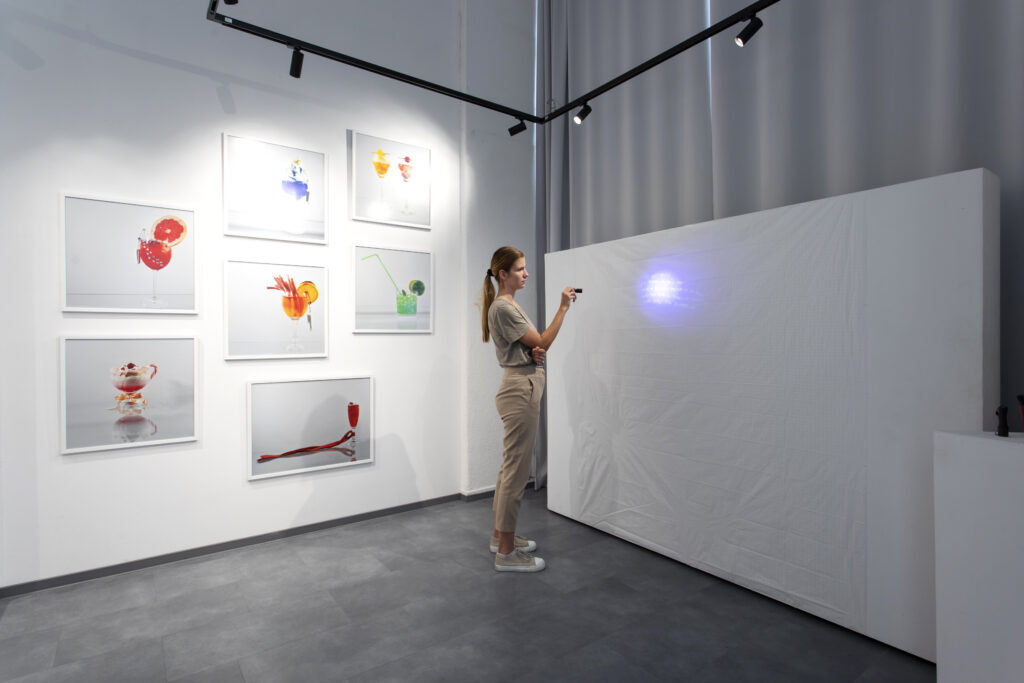
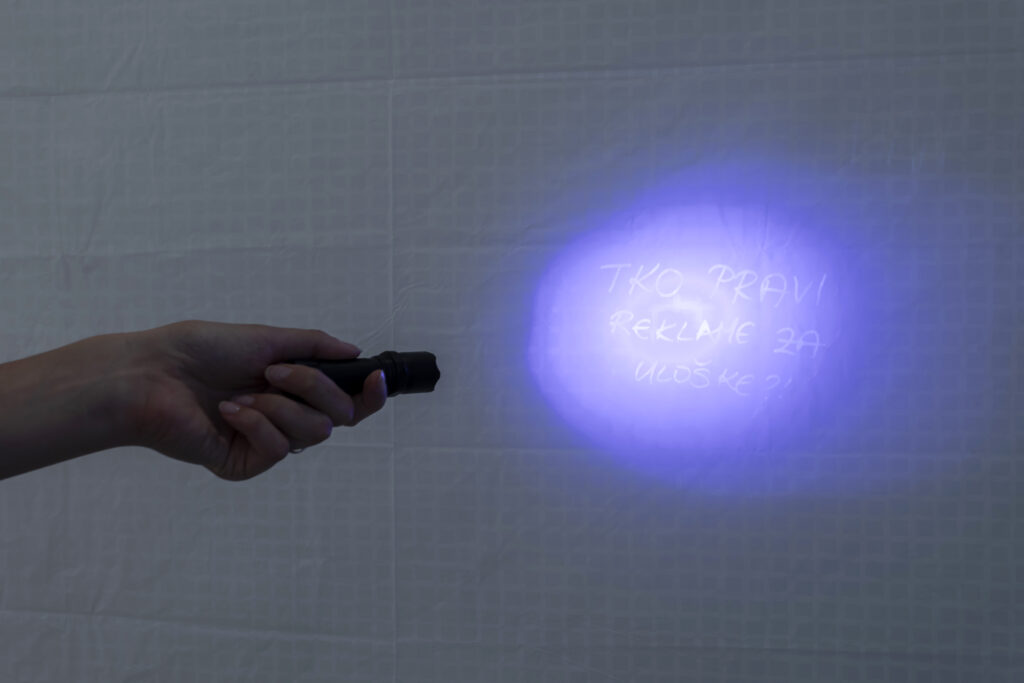
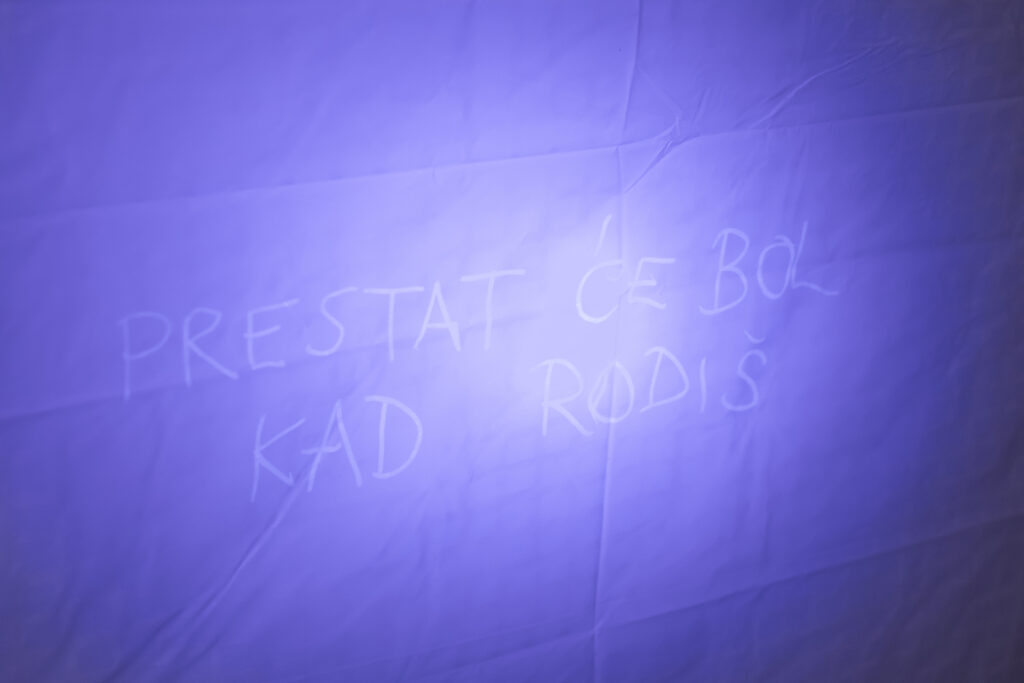
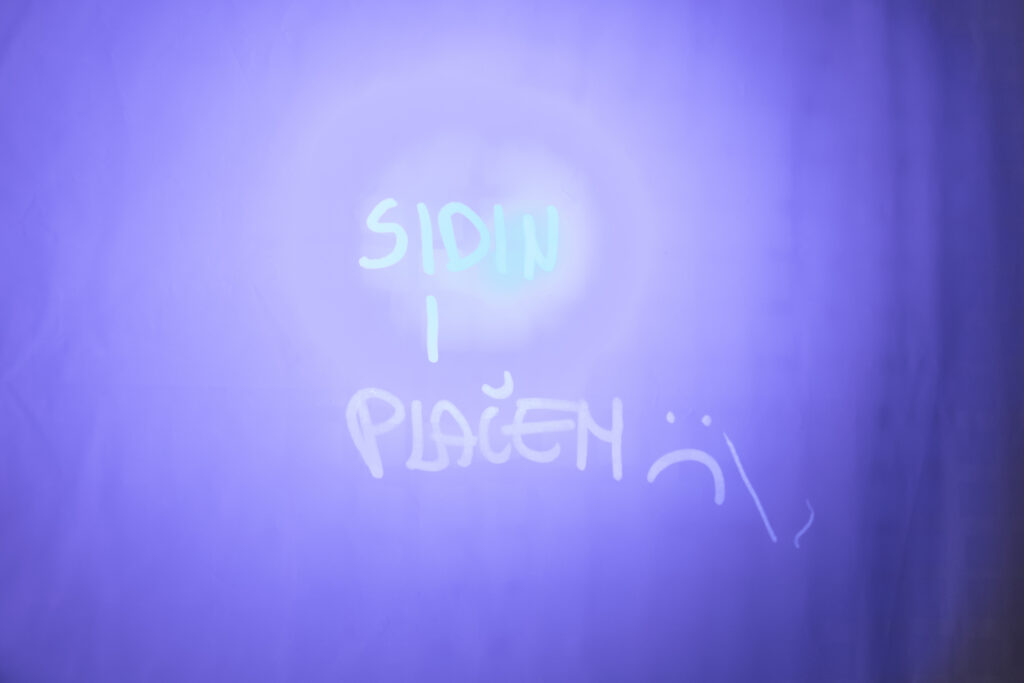
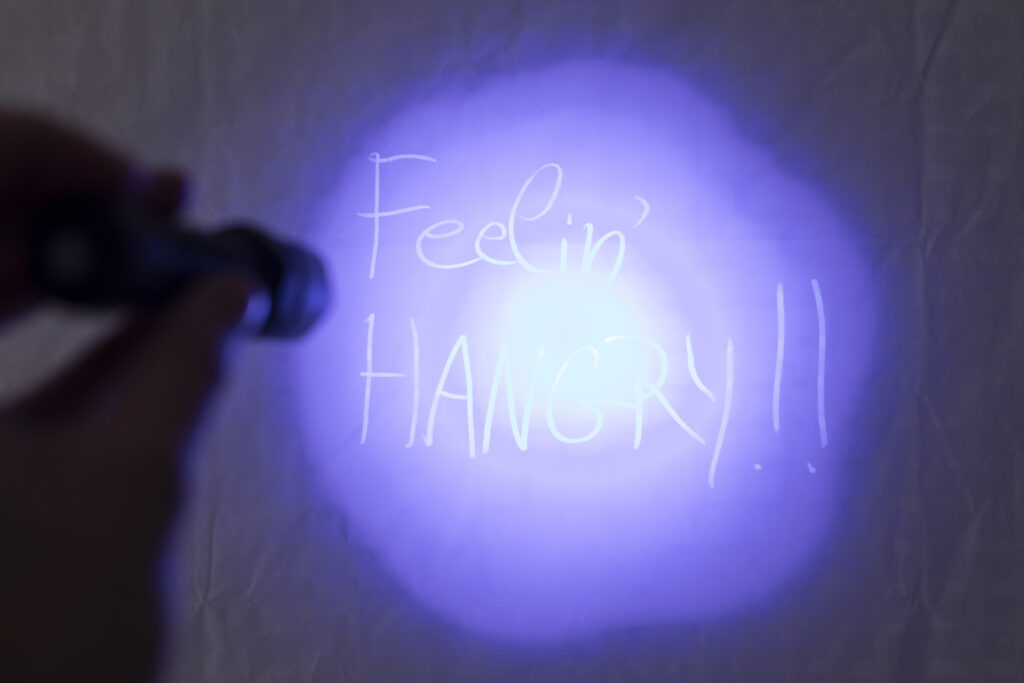
The counterpart to poetry installation is a series of photographs on the topic of PMS and food cravings. The photographs, intentionally highly aestheticized, represent various cocktails into which the artist translates pain, but also the cravings for certain drinks and foods, or pleasure, as a counterbalance to pain. Elaine Scarry, in her scientific monograph “The Body of Pain”, argues that the experience of pain is unsharable because it is a private, subjective event that does not simply resist language, but actively destroys it. (3) However, Milica Denković not only talks about pain by successfully mixing various artistic forms, she also encourages others to share their own experiences. Therefore, in the last, participatory part of the exhibition, the artist invites visitors to summarize their experience or knowledge about menstruation or severe pain and to write it on a shower curtain with invisible UV markers. The text becomes visible only when the UV lamp is turned on. This work, called “Under the Surface”, embodies the silence and the unspoken in the public discourse about menstruation and menstrual pain.
– Jasmina Šarić
(1) Roselyn Rey, The History of Pain. Paris: Palais de la Decouverte, 1993.
(2) Adapted from Unwell Women by Elinor Cleghorn (2021) and article Gender Medicine History
(3) Scarry E., The Body in Pain: The Making and Unmaking of the World. Oxford: Oxford University Press, 1987.
.